
Feline HCM Genetic Testing: HCM-Associated Variants, Cat Breeds & Real-Time PCR Genotyping
August 14, 2026
Feline hypertrophic cardiomyopathy (HCM) is one of the most important inherited cardiac conditions studied in domestic cats. Genetic testing can provide useful information about HCM-associated genetic variants, particularly in cat breeds where specific variants have been identified.
For veterinary laboratories, animal genetic testing facilities, breeders, and researchers, real-time fluorescence PCR genotyping provides a practical molecular approach for detecting selected feline genetic variants from simple swab samples.
This article explains the principles of feline HCM genetic testing, important HCM-associated variants, relevant cat breeds, sample types, and how allele-specific real-time PCR can be used for feline genetic research.
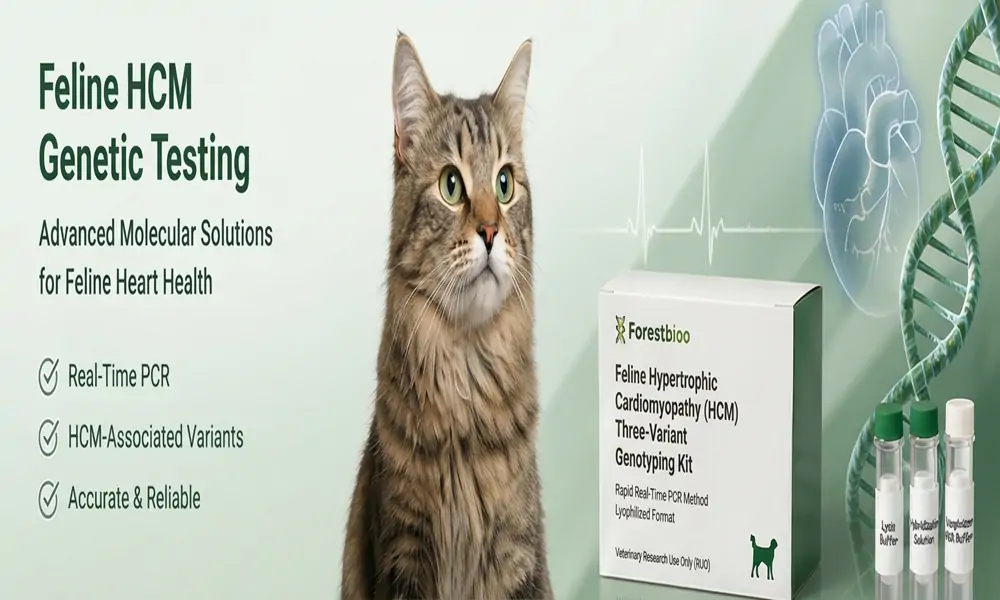
What Is Feline Hypertrophic Cardiomyopathy (HCM)?
Feline hypertrophic cardiomyopathy (HCM) is a cardiac condition characterized by abnormal thickening of the heart muscle.
HCM is considered one of the most common cardiac diseases affecting domestic cats. Clinical presentation can vary considerably between individual cats, and some cats may show few or no obvious signs during early stages.
Genetic factors are particularly important in several pedigree cat populations.
Research has identified breed-associated variants in genes such as MYBPC3, which encodes cardiac myosin-binding protein C.
For this reason, feline HCM genetic testing can be useful as part of a broader genetic and veterinary research program.
Genetic testing should not be interpreted as a standalone diagnosis. Genetic results may need to be considered together with:
Breed information
Family history
Clinical observations
Echocardiographic examination
Other relevant veterinary assessments
Why Is Feline HCM Genetic Testing Important?
Genetic testing can provide information that may not be available from clinical observation alone.
For research laboratories and breeding programs, feline genetic testing may help researchers:
Identify HCM-Associated Genetic Variants
DNA testing can identify specific allele variants associated with increased genetic risk.
Support Feline Breeding Research
Genotype information can be incorporated into breeding research programs to better understand the inheritance and distribution of selected variants.
Support Population Genetic Studies
Laboratories can use targeted genotyping to investigate variant frequencies across different feline populations.
Complement Cardiac Screening
Genetic testing and echocardiographic examination provide different types of information and should not be considered interchangeable.
For Maine Coon and Ragdoll cats, specific MYBPC3 variants have been extensively investigated in relation to HCM. (Read the original study)
Which Genetic Variants Are Associated with Feline HCM?
Several genetic variants have been investigated in feline HCM research.
Two of the best-established breed-associated variants are:
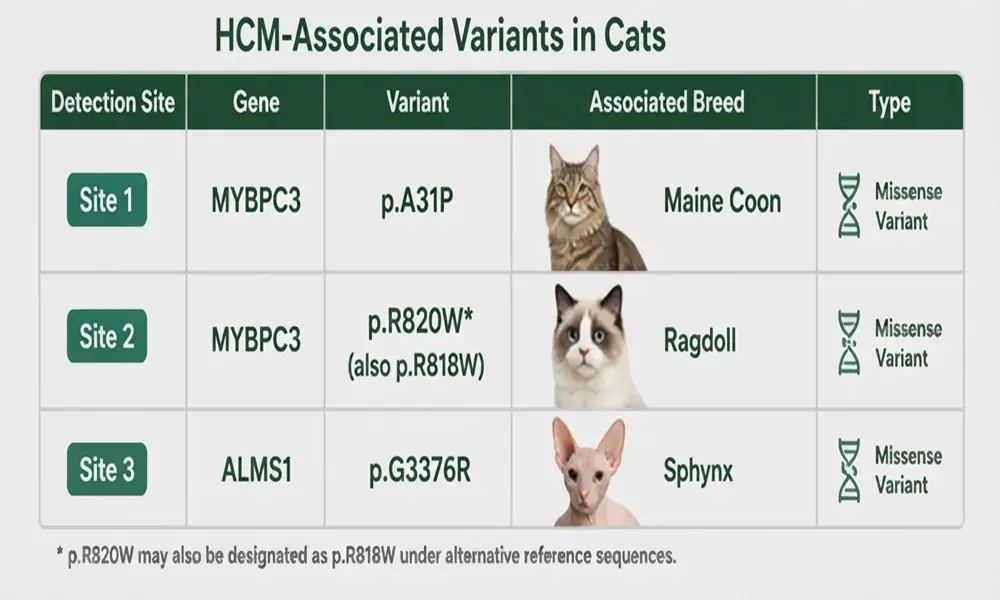
MYBPC3 p.A31P — Maine Coon Cats
The MYBPC3 p.A31P variant has been associated with HCM risk in Maine Coon cats.
Genetic testing for this variant has been used in feline breeding and research programs.
Current veterinary literature continues to support targeted genetic testing of this variant in Maine Coon cats. (Read the original study)
MYBPC3 p.R820W / p.R818W — Ragdoll Cats
The MYBPC3 p.R820W variant, also referred to as p.R818W under alternative reference or nomenclature systems, has been associated with hypertrophic cardiomyopathy (HCM) in Ragdoll cats.
Different reference sequences and nomenclature systems can result in slightly different amino-acid numbering or variant descriptions in published studies. (Read the original study) For this reason, variant nomenclature should always be interpreted together with the relevant gene, reference sequence, and genomic position.
Research and veterinary genetic testing resources have documented the association between the MYBPC3 R820W variant and HCM in Ragdoll cats.Other HCM-
Associated Variants
Additional variants have been investigated in other cat breeds.
However, the strength of evidence can vary between variants. Therefore, genetic testing products should describe these targets as HCM-associated variants or variants under genetic investigation rather than implying that every detected variant independently establishes disease.
Which Cat Breeds May Benefit from HCM Genetic Research?
Breed-specific genetic testing is particularly relevant when a variant has been associated with a particular feline population.
Examples include:
Cat Breed | Genetic Variant | Gene |
Maine Coon | p.A31P | MYBPC3 |
Ragdoll | p.R820W / p.R818W | MYBPC3 |
Sphynx | Selected HCM-associated variants under research | ALMS1 |
The relationship between genotype and phenotype can be complex, and a genetic result should always be interpreted within the appropriate breed and research context.
Current literature specifically supports the importance of MYBPC3 A31P in Maine Coon cats and MYBPC3 R820W/R818W in Ragdolls. (Read the original study)
How Does Real-Time PCR Detect Feline Genetic Variants?
One practical approach for targeted feline genotyping is allele-specific fluorescence PCR.
Instead of sequencing the entire genome, allele-specific PCR is designed to distinguish specific genetic variants.
A typical workflow includes:
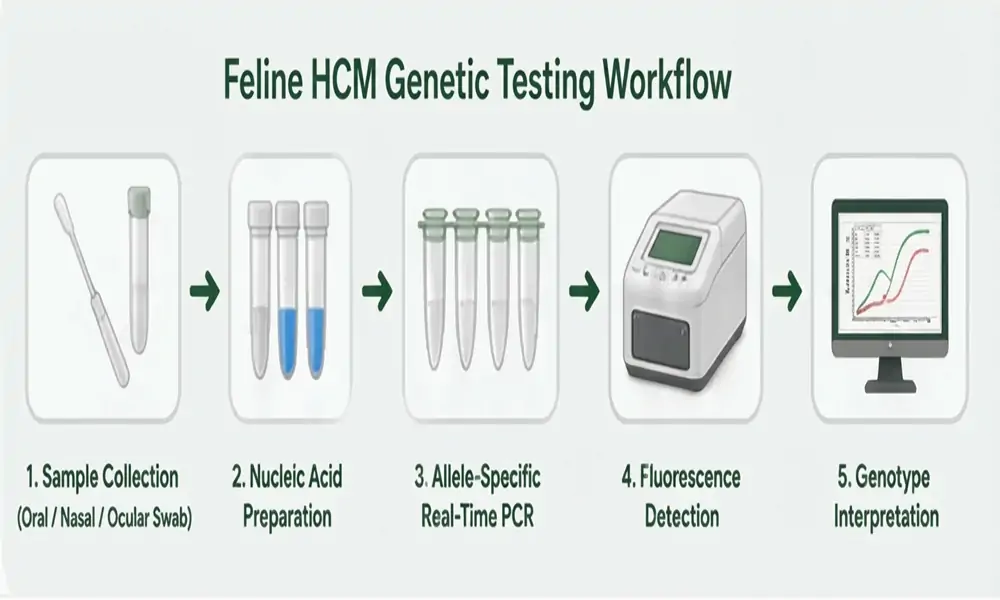
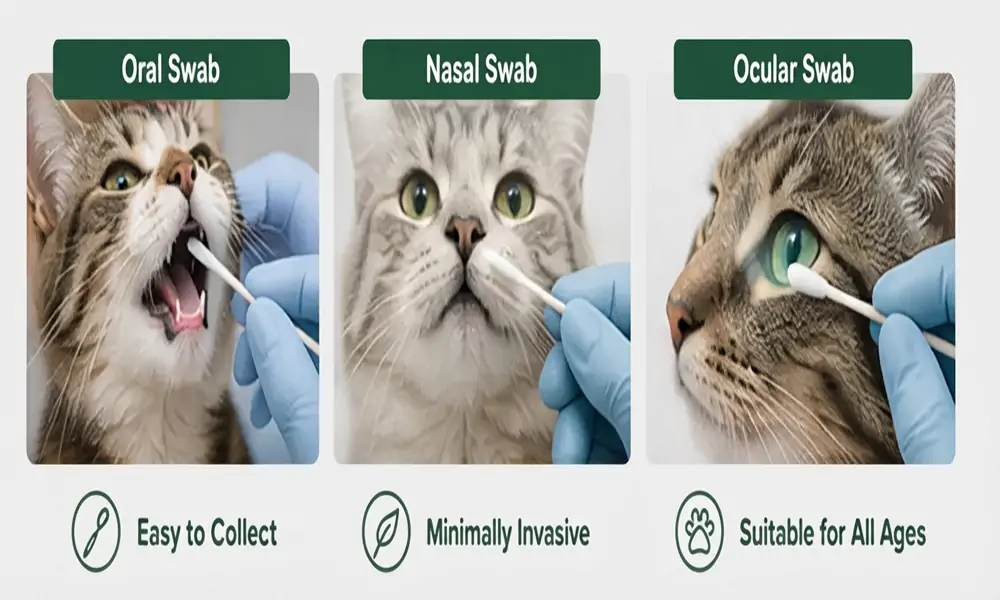
1. Sample Collection
Feline DNA can be collected using a sterile:
Oral swab
Nasal swab
Ocular swab
For example, the Molecularreagent feline HCM variant kit is designed for oral, nasal, or ocular swab samples.
2. Nucleic Acid Release
The collected swab is processed using the supplied lysis system.
The processed sample can then be used as the PCR template according to the kit protocol.
3. Allele-Specific PCR
The prepared sample is added to the lyophilized PCR reagent.
The reaction uses fluorescence detection to distinguish allele-specific signals.
4. Fluorescence Analysis
The PCR instrument detects fluorescence during amplification.
For the Molecularreagent HCM kit, the assay uses a real-time fluorescence PCR platform with a compatible FAM detection channel.
5. Genotype Interpretation
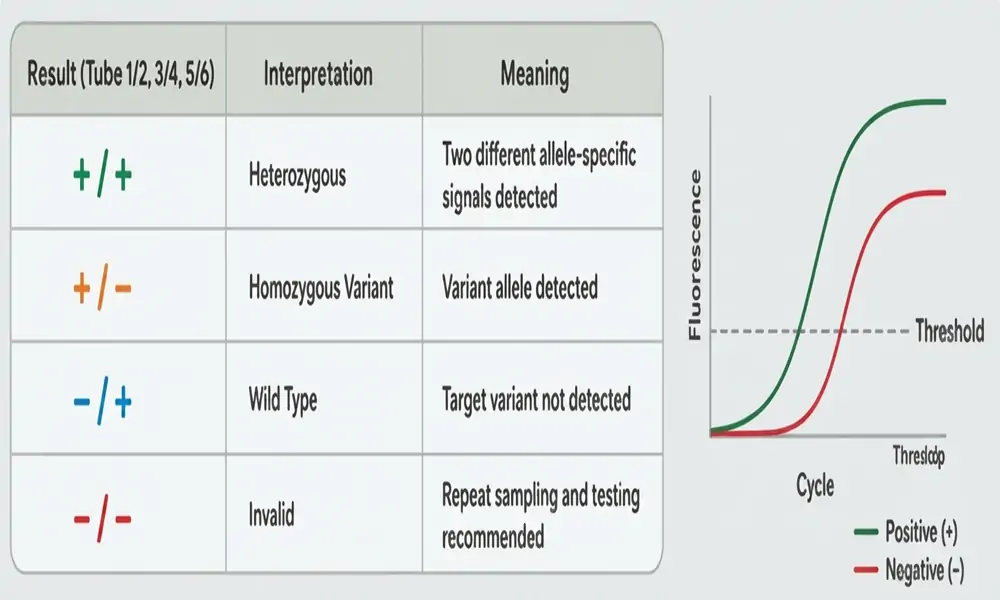
The detected allele-specific signals can be interpreted according to the assay's genotype interpretation rules.
This provides a targeted molecular method for feline genetic research.
What Sample Can Be Used for Feline HCM Genetic Testing?
One of the advantages of targeted feline genetic testing is that DNA can be obtained from relatively simple swab samples.
The Molecularreagent HCM-associated variant detection kit supports:
Oral swab
Nasal swab
Ocular swab
The workflow is designed to minimize sample preparation and can use the processed swab sample directly as the PCR template.
This type of sampling can be particularly convenient for:
Veterinary research laboratories
Animal genetic testing laboratories
Cat breeding research programs
Feline population studies
Veterinary molecular research
HCM Genetic Testing vs. Echocardiography
An important question is:
Can a genetic test replace echocardiography?
No.
Genetic testing and echocardiography provide different information.
Genetic testing identifies selected genetic variants.
Echocardiography evaluates cardiac structure and function.
A cat may carry an HCM-associated variant without currently showing obvious cardiac changes, while a cat without a particular tested variant may still develop HCM through other genetic or non-genetic mechanisms.
For this reason, veterinary guidelines emphasize that genetic testing should be interpreted together with clinical and echocardiographic information. (Read the original study)
This is also why your product manual correctly states that the test should not be used as a standalone clinical diagnosis.
What Is a Feline HCM Genotyping Kit?
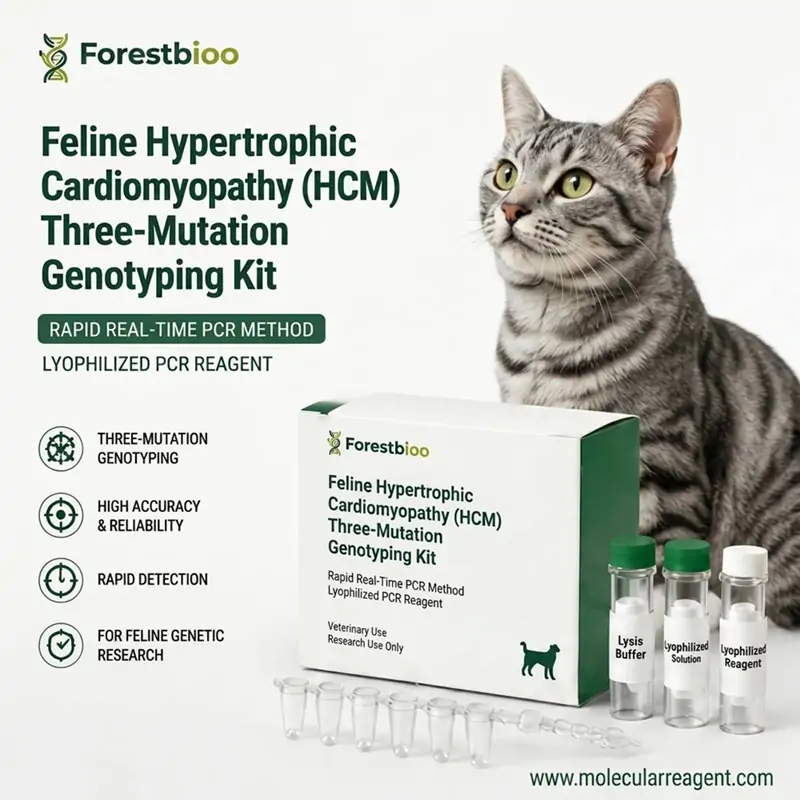
A feline HCM genotyping kit is a molecular testing reagent designed to detect selected genetic variants associated with feline hypertrophic cardiomyopathy.
For laboratories looking for a targeted PCR workflow, the Molecularreagent kit uses:
Rapid Real-Time Fluorescence PCR
Allele-Specific PCR Technology
Lyophilized PCR Reagents
Oral, Nasal or Ocular Swab Samples
The current kit includes three targeted genetic sites:
MYBPC3 p.A31P
MYBPC3 p.R820W
ALMS1 p.G3376R
The product is designed for veterinary research and genetic risk assessment, rather than standalone clinical diagnosis.
Feline HCM Genetic Testing for Veterinary Laboratories
For veterinary molecular laboratories, the choice of a genetic testing assay involves more than simply selecting a target gene.
Important considerations include:
Target Selection
Does the assay detect the variants relevant to the laboratory's research population?
Sample Compatibility
Can the laboratory conveniently collect and process the available sample types?
PCR Platform Compatibility
Is the assay compatible with the laboratory's existing real-time PCR instrument?
The HCM assay is compatible with fluorescence PCR instruments equipped with an appropriate FAM channel, including platforms such as ABI 7500, Bio-Rad CFX96, Roche LightCycler 480 and other compatible systems.
Reagent Stability
Lyophilized PCR reagents can simplify storage and transportation compared with conventional liquid PCR reagents.
Frequently Asked Questions About Feline HCM Genetic Testing
What is the most common genetic test for HCM in cats?
The most established breed-associated tests include MYBPC3 p.A31P in Maine Coon cats and MYBPC3 p.R820W/R818W in Ragdoll cats. (Read the original study)
Can a cat test negative for an HCM-associated variant and still develop HCM?
Yes.
A negative result for a specific tested variant does not exclude all possible genetic or other causes of HCM.
What sample is used for feline HCM genetic testing?
Common sample types include oral, buccal, nasal, or ocular swabs, depending on the assay.
The Molecularreagent HCM kit supports oral, nasal, and ocular swabs.
Is feline HCM genetic testing the same as an HCM diagnosis?
No.
Genetic testing detects selected genetic variants. It should not be used as a standalone clinical diagnosis.
Can real-time PCR be used for feline genotyping?
Yes. Allele-specific real-time fluorescence PCR can be used to detect selected feline genetic variants.
Is the HCM test useful for cat breeders?
Genetic information can be useful in breeding research and population management, particularly for breeds where specific HCM-associated variants have been established.
Feline HCM Genetic Testing Kit for Veterinary Research
For laboratories looking for a targeted molecular method for feline HCM-associated variant research, Molecularreagent provides a Feline HCM-Associated Variant Detection Kit based on rapid real-time fluorescence PCR.
Key features:
Three targeted genetic sites
Allele-specific fluorescence PCR
Lyophilized PCR format
Oral, nasal and ocular swab compatible
FAM-channel real-time PCR detection
Simple sample preparation
Designed for veterinary research and genetic risk assessment
Learn more about the Feline HCM-Associated Variant Detection Kit
Interested in evaluating the assay for your laboratory?
Contact us for product specifications, sample requirements, package sizes, validation information, or quotation.
Feline Hypertrophic Cardiomyopathy HCM Gene Detection Kit (FV601)
Related Feline Genetic Testing
Feline Polycystic Kidney Disease (PKD) Variant Detection
Feline PKD is another important inherited condition investigated through targeted genetic testing.
The Molecularreagent PKD-associated variant kit targets PKD1 exon 29 and uses rapid real-time fluorescence PCR with oral, nasal, or ocular swab samples.
Explore the Feline PKD Variant Detection Kit
Conclusion
Feline HCM genetic testing provides a practical molecular approach for investigating selected genetic variants associated with hypertrophic cardiomyopathy in cats.
For breeds such as Maine Coon and Ragdoll, targeted testing of established MYBPC3 variants can provide valuable genetic information for research and breeding programs.
When combined with appropriate clinical evaluation and echocardiographic screening, genetic information can contribute to a more comprehensive understanding of feline HCM risk.
For veterinary laboratories, allele-specific real-time fluorescence PCR offers a targeted, scalable approach for feline genotyping without requiring whole-genome sequencing.
Request Product Information
Looking for a reliable supplier of veterinary PCR kits?
Forest BioTech provides professional molecular diagnostic solutions with global OEM and private-label services.
✔OEM & Private Label Available
✔Ambient Temperature Shipping
✔Global Technical Support
✔Fast Worldwide Delivery