How to Extract RNA Directly from -80°C Frozen Whole Blood ,without red blood cell (RBC) lysis
July 19, 2026
Author: Forest BioTech
Frozen whole blood is one of the most common — and most challenging — sample types in molecular biology labs. Once a tube comes out of a -80°C freezer, researchers are often unsure whether the RNA inside is still usable, and even more unsure how to pull it out without hours of tedious pre-processing.
This is where direct RNA extraction from frozen blood becomes a critical capability: a streamlined workflow that goes straight from a frozen tube to RT-PCR- or RNA-seq-ready RNA, without red blood cell (RBC) lysis, buffy coat separation, or leukocyte isolation.
In this article, we'll look at why labs freeze blood in the first place, what makes RNA extraction from frozen samples so difficult, and how a proprietary direct extraction workflow solves both problems at once.
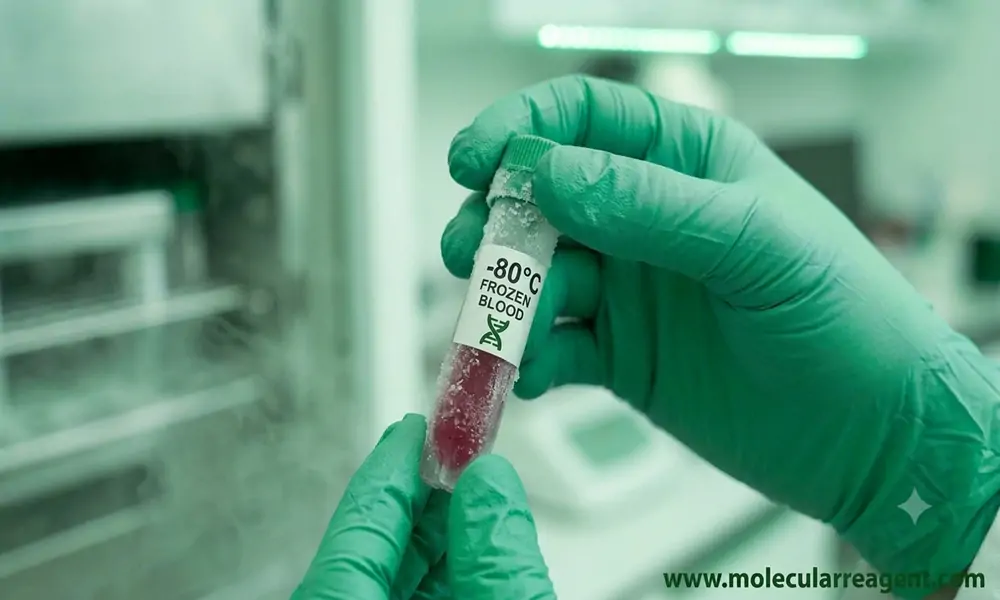
Why Do Researchers Store Blood Samples at -80°C?
Blood is rarely processed the moment it's drawn. In most real-world research settings, samples are collected, frozen, and analyzed later — sometimes years later. Storing whole blood at -80°C preserves nucleic acids and protects the integrity of downstream data, making it a standard practice across several areas.
1. Biobanking and Large Repositories
Biobanks collect and store thousands to millions of blood samples for future studies. -80°C storage allows these repositories to bank samples now and make them available for RNA-based analyses years down the line.
2. Retrospective and Longitudinal Studies
Retrospective and longitudinal studies depend heavily on archived samples. Researchers frequently need to go back to frozen blood collected months or years ago to correlate gene expression with clinical outcomes that only became apparent later.
3. Multi-Site Clinical Research Trials
In multi-site clinical trials, blood samples are often collected at one location, frozen, shipped, and processed at a central lab. Freezing at -80°C bridges the gap between collection and analysis, keeping RNA quality consistent across different sites.
The Main Challenges of RNA Extraction from Frozen Blood
While freezing protects samples for long-term storage, it introduces serious complications when it comes time to extract the RNA. Conventional isolation protocols often fail to address these unique hurdles:
· Severe RNA Degradation: RNA is inherently unstable, and endogenous RNases in blood remain active until fully inactivated. Ice crystal formation during freezing can damage cell membranes, releasing these RNases and accelerating degradation before extraction even begins.
· Repeated Freeze-Thaw Cycles: Many archived samples aren't extracted all at once. Each freeze-thaw cycle further stresses RNA integrity, exponentially increasing the risk of degraded, low-yield RNA.
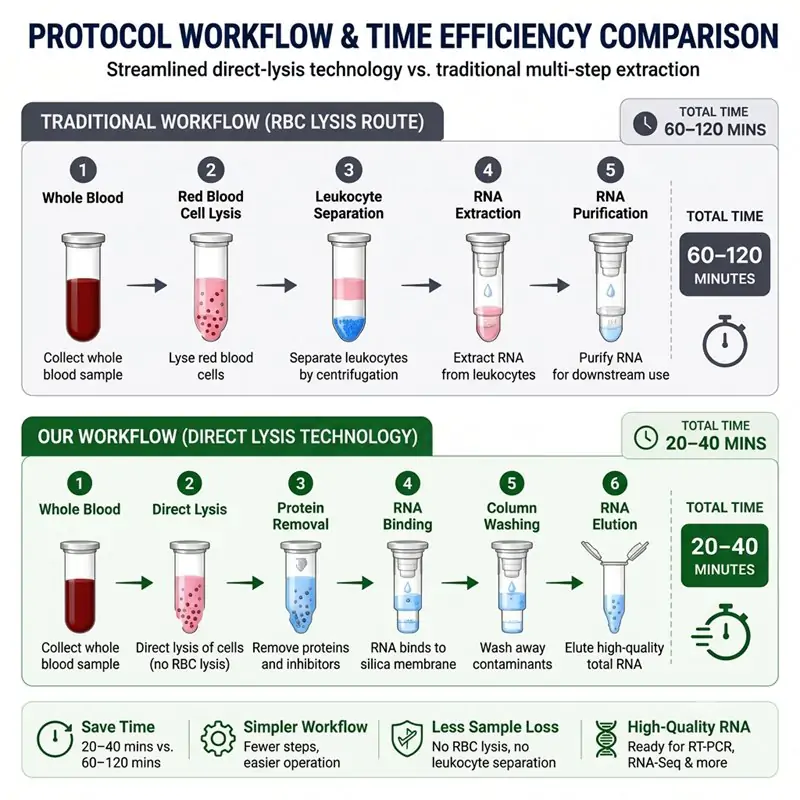
· Sample Processing Complexity: Traditional workflows require RBC lysis, buffy coat isolation, or leukocyte separation before extraction. For frozen samples, these extra steps add hands-on time and introduce more opportunities for RNA loss.
The Solution: A Direct Extraction Workflow Driven by Chemistry
The solution to both storage-related degradation and processing complexity is a workflow that skips cell separation entirely and extracts RNA directly from the frozen sample.
Step 1: Start Directly from the -80°C Frozen Tube
Samples go straight from the freezer into the extraction workflow without thawing into components first. The frozen sample itself is the immediate starting material, which completely eliminates the window of time where cells thaw and endogenous RNases can attack the RNA.
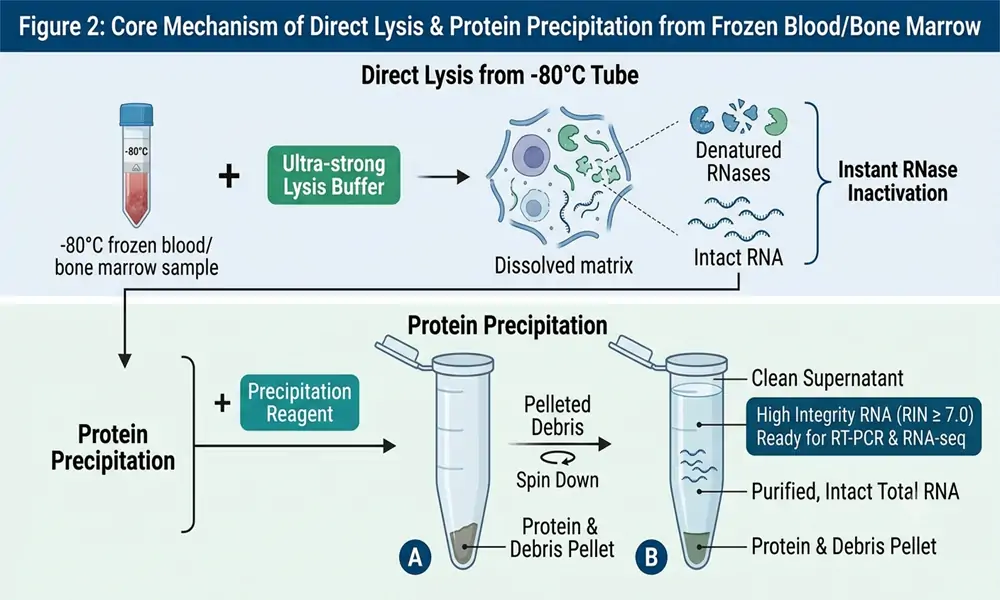
Step 2: Strong Lysis and Protein Precipitation (The Core Principle)
Instead of relying on fragile cell-separation techniques, this approach utilizes an ultra-strong lysis chemistry paired with an advanced protein precipitation mechanism.
· Instant RNase Inactivation: The strong lysis buffer completely dissolves the whole blood or bone marrow matrix instantly, locking RNases in a permanently denatured state before they can degrade your target RNA.
· Single-Pass Protein Removal: Protein and cellular debris are rapidly precipitated out of the dissolved mixture and removed via a single pelleting step. There is no separate RBC lysis or leukocyte isolation required, allowing true direct RNA isolation from both whole blood and complex bone marrow samples.
Step 3: Gain RT-PCR / RNA-Seq Ready RNA
The output is highly purified total RNA that meets strict purity (A260/A280 ≥ 1.9) and integrity requirements. It is perfectly optimized for sensitive downstream applications like RT-PCR, RT-qPCR, and high-throughput RNA-seq library preparation without requiring any additional cleanup steps.
Performance Comparison: Traditional vs. Direct Extraction
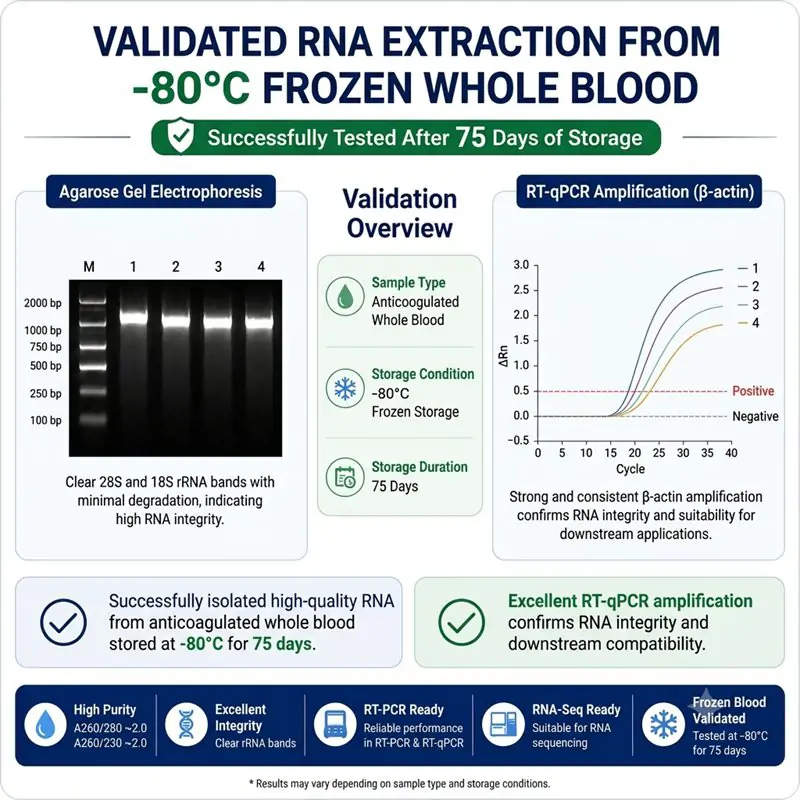
To help labs optimize their choice, the table below highlights how a direct chemical lysis approach compares against traditional methods:
Key Metrics | Traditional Isolation Workflows | Direct Lysis & Precipitation Workflow |
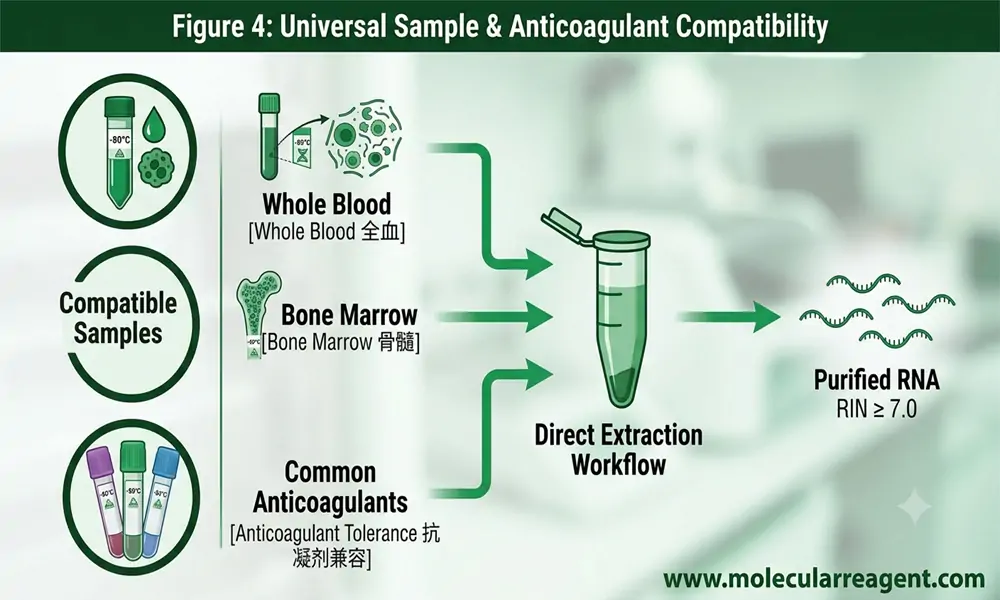
Compatible Samples | Fresh/Thawed Whole Blood only | Frozen/Fresh Whole Blood & Bone Marrow |
Total Hands-on Time | 2 - 3 Hours (incubation & separations) | < 30 Minutes |
Pre-processing Steps | RBC Lysis / Buffy Coat Isolation Required | None (Direct from frozen tube) |
RNA Quality (RIN) | Highly variable due to thaw degradation | Consistently High (RIN ≥ 7.0) |
Anticoagulant Tolerance | Limited (highly sensitive to Heparin) | Excellent (EDTA, Citrate, and Heparin) |
A Workflow Built for Frozen, Archived Blood and Bone Marrow
This direct extraction approach was developed specifically to address the messy realities of archived biobank samples: variable storage times, freeze-thaw histories, and the absolute need for standardized, reproducible RNA yields. By completely eliminating RBC lysis and cell separation, your lab can drastically cut down hands-on processing time while ensuring maximum protection for your RNA quality.
If you're evaluating an RNA extraction solution for your frozen whole blood or bone marrow samples, our technical team can walk you through our validation data and protocol optimization.
🔗 Take Action:
· 👉 Explore our Whole Blood Total RNA Extraction Kit to see full product specifications, pricing, and pack sizes.
· 📖 Read our foundational pillar guide: High-Quality RNA Extraction from -80°C Frozen Whole Blood
 .
.
Frequently Asked Questions (FAQ)
Can this workflow be used for bone marrow samples as well as whole blood?
Yes. Because the mechanism relies on a highly aggressive lysis buffer and a robust protein precipitation technique rather than cell-size or cell-type separations, it is fully compatible with both whole blood and cellularly dense bone marrow samples.
Does the lysis chemistry work with all common anticoagulants?
Yes. The downstream precipitation and binding chemistry are meticulously optimized to neutralize common PCR inhibitors. It functions seamlessly with blood collected in EDTA, Sodium Citrate, and typically challenging Heparin tubes.
Can RNA be extracted directly from frozen whole blood without thawing it first?
Yes. With our specialized lysis chemistry, the frozen blood dissolves directly into the lysis buffer, completely bypassing the traditional RBC lysis or leukocyte isolation stages, protecting the sample from freeze-thaw degradation.
This is the first article in our Whole Blood Total RNA Extraction series. Continue reading our next piece, [RNA Extraction Without RBC Lysis: A Faster Workflow for Whole Blood Samples], to see how skipping RBC lysis stacks up against older laboratory standards.
Need a Faster Blood RNA Extraction Solution?
Ready to optimize your blood RNA extraction?Stop struggling with degradation in frozen samples. Explore our optimized [Whole Blood Total RNA Extraction Kit] today to ensure high integrity for your downstream RT-qPCR. 👉 [View Product Details & Protocol]
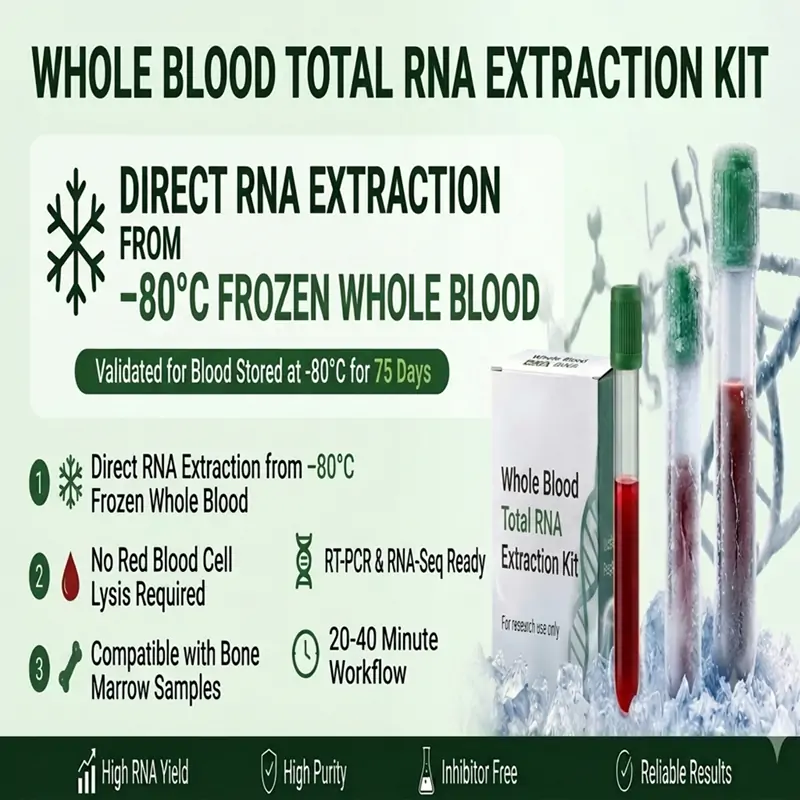
The Whole Blood Total RNA Extraction Kit enables researchers to isolate high-quality total RNA directly from fresh or -80°C frozen whole blood — no RBC lysis, no leukocyte separation — in just 20–40 minutes.
Suitable for:
✓ RT-PCR
✓ RT-qPCR
✓ RNA-Seq
✓ Gene Expression Profiling
✓ Biobanking & Retrospective Studies
✓ Bone Marrow Samples
Request a Free Sample | Request Distributor Pricing | Contact Technical Support