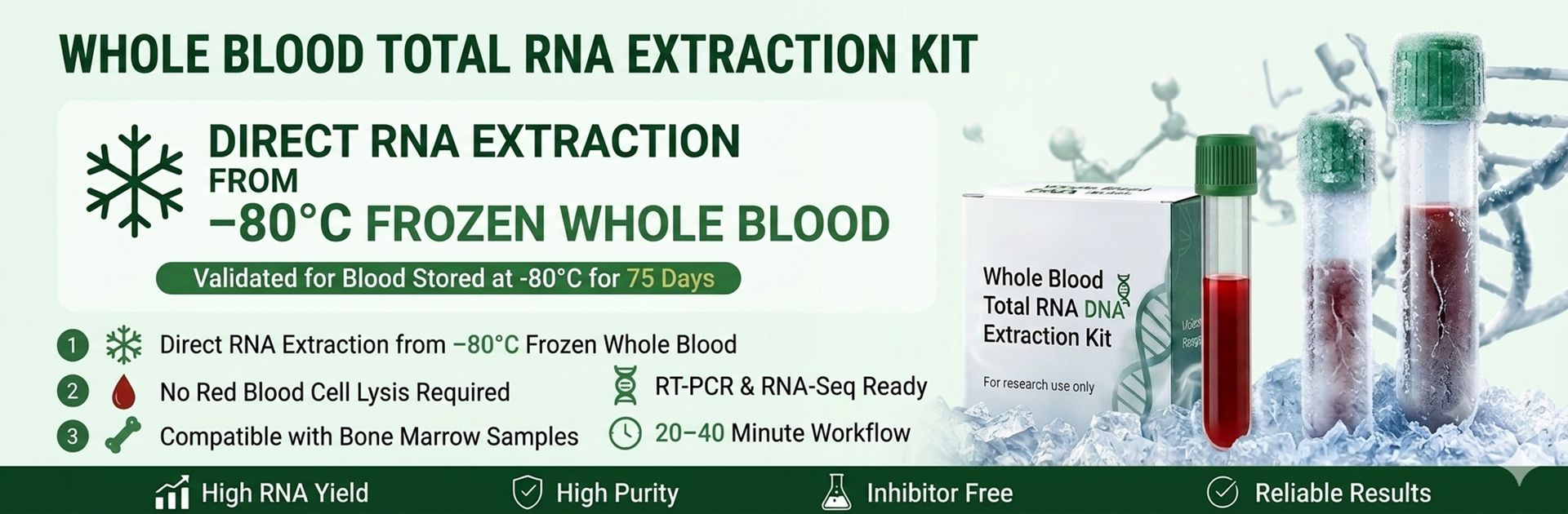
How to Extract High-Quality RNA from Whole Blood Stored at -80°C
June 22, 2026
Author: Forest Biotech
Whole blood is one of the most commonly used sample types in molecular biology, clinical diagnostics, biomarker discovery, infectious disease research, and transcriptomics studies. However, researchers often face a major challenge when working with frozen blood samples:
Can high-quality RNA still be extracted from whole blood after long-term storage at -80°C?
Traditional blood RNA extraction methods typically require red blood cell (RBC) lysis and leukocyte separation before RNA purification. These extra steps increase processing time, introduce sample loss, and may accelerate RNA degradation.
For laboratories handling frozen blood samples, biobanked specimens, or clinical research cohorts, a faster and more reliable workflow is highly desirable.
In this article, we discuss the challenges of RNA extraction from frozen blood, compare traditional and direct extraction workflows, and present experimental validation demonstrating successful RNA isolation from whole blood stored at -80°C for 75 days using the Whole Blood Total RNA Extraction Kit.
Why Is RNA Extraction from Frozen Whole Blood Challenging?
Unlike DNA, RNA molecules are highly susceptible to degradation. Several factors can affect RNA quality during storage and processing:
RNase contamination
Freeze-thaw damage
Blood cell lysis
Protein contamination
Multiple sample handling steps
These challenges become even more significant when blood samples are stored for extended periods at -80°C.
As a result, many conventional RNA extraction protocols perform poorly with frozen whole blood samples.
Traditional Blood RNA Extraction Methods
Most conventional blood RNA extraction workflows involve multiple preprocessing steps before RNA purification.
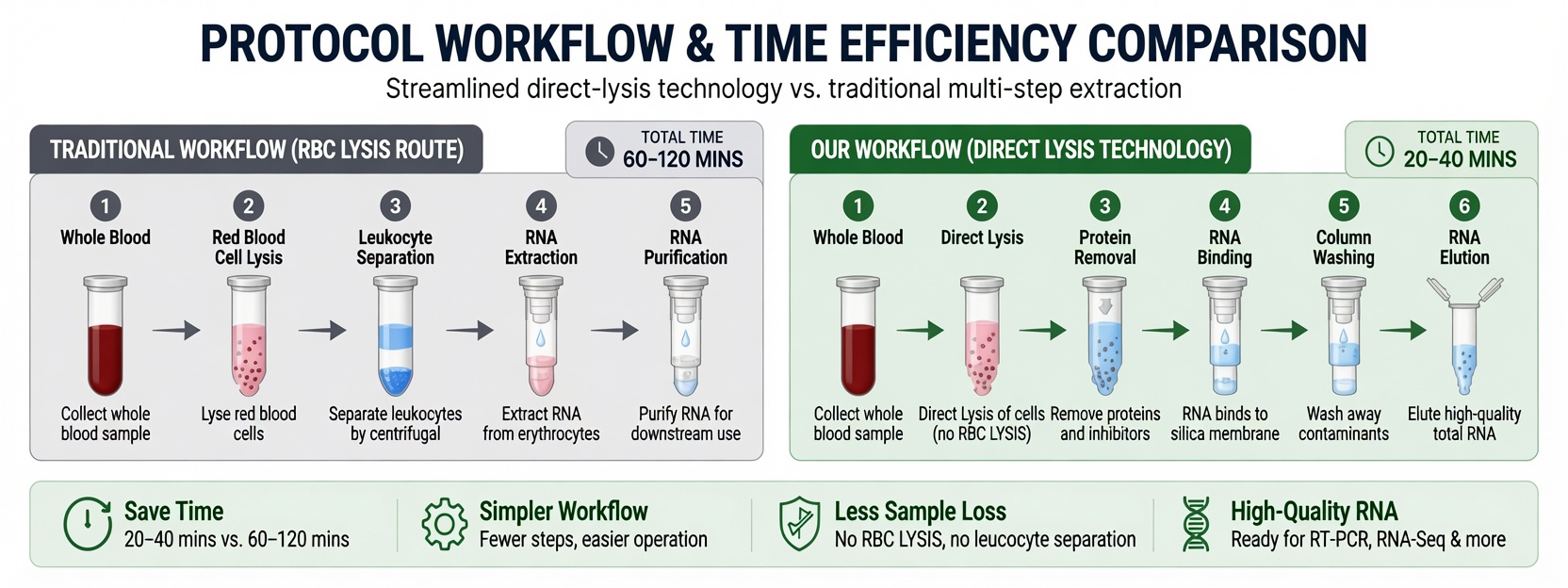
Traditional Workflow
Whole Blood
↓
Red Blood Cell (RBC) Lysis
↓
Leukocyte Separation
↓
RNA Extraction
↓
RNA Purification
Limitations of Traditional Methods
Multiple centrifugation steps
Increased hands-on time
Higher risk of RNA degradation
Greater sample-to-sample variability
Limited compatibility with frozen blood samples
Typical processing time: 60–120 minutes
For laboratories processing large sample numbers, this workflow can become a significant bottleneck.
A Faster Alternative: Direct Whole Blood RNA Extraction
Recent advances in blood RNA purification technology have enabled direct extraction of total RNA from whole blood without RBC lysis or leukocyte separation.
Direct Workflow
Whole Blood
↓
Direct Lysis
↓
Protein Removal
↓
RNA Binding
↓
Column Washing
↓
RNA Elution
Key Advantages
✔ No red blood cell lysis required
✔ No leukocyte separation required
✔ Compatible with fresh whole blood
✔ Compatible with frozen whole blood
✔ Compatible with bone marrow samples
✔ RT-PCR and RNA-Seq ready
✔ Workflow completed in 20–40 minutes
This simplified workflow significantly reduces processing time while minimizing RNA degradation risks.
Experimental Validation: RNA Extraction from Whole Blood Stored at -80°C for 75 Days
One of the most valuable features of the Whole Blood Total RNA Extraction Kit is its ability to recover high-quality RNA from frozen blood samples.
To evaluate this capability, a validation study was performed using anticoagulated whole blood stored at -80°C for 75 days.
Experimental Materials
Blood Samples
Two different sample preparation strategies were compared:
Group A – Direct Frozen Whole Blood
500 μL fresh anticoagulated whole blood
Stored directly at -80°C for 75 days
Group B – Buffer L9 Protected Whole Blood
500 μL fresh anticoagulated whole blood
Mixed with 1 mL Buffer L9
Stored at -80°C for 75 days
Why Is Buffer L9 Important?
Buffer L9 is a proprietary reagent included in the Whole Blood Total RNA Extraction Kit.
Whole blood pre-mixed with Buffer L9 can be stored frozen for extended periods without significant RNA degradation. In addition, blood samples mixed with Buffer L9 can be stored at -20°C for long-term preservation, providing greater flexibility for sample collection, transportation, and storage.
Reagents Used
RNA Extraction
Whole Blood Total RNA Extraction Kit
Manufacturer: Forestbiotech
Catalog Number: FR5201050
Reverse Transcription
First-Strand cDNA Synthesis Kit
Manufacturer: Forestbiotech
Catalog Number: FR7306025
qPCR Detection
2× SYBR Green PCR Mix
Manufacturer: Forestbiotech
Catalog Number: FR7106100
Target Gene
Human β-actin
Forward Primer:
TGACGTGGACATCCGCAAAG
Reverse Primer:
CTGGAAGGTGGACAGCGAGG
Experimental Method
Two groups were prepared, with two replicates in each group.
Group A (Samples 1 & 2)
Add 500 μL fresh anticoagulated whole blood into two separate 2 mL tubes.
Store directly at -80°C for 75 days.
Group B (Samples 3 & 4)
Add 500 μL fresh anticoagulated whole blood and 1 mL Buffer L9 into each tube.
Mix thoroughly and store at -80°C for 75 days.
RNA Extraction Workflow After 75 Days
After frozen storage, all samples were thawed completely at room temperature.
The following protocol was then performed:
Add 1 mL Buffer L9 to Samples 1 and 2 and mix thoroughly.
Centrifuge at 13,000 rpm for 10 minutes.
Transfer 700 μL supernatant into a 1.5 mL tube containing 500 μL absolute ethanol.
Mix thoroughly.
Load the mixture onto the RNA purification column in two loading steps.
Centrifuge and discard flow-through.
Wash once with 500 μL Buffer WA.
Wash once with 700 μL Buffer WBR.
Elute RNA with 50 μL RNase-Free Water.
Measure RNA concentration using a microvolume spectrophotometer.
Perform agarose gel electrophoresis.
Synthesize first-strand cDNA.
Use 5 μL cDNA as template for RT-PCR analysis.
Total extraction time: approximately 20–40 minutes
Results
RNA Yield and Purity
Purified RNA was quantified using a microvolume spectrophotometer with RNase-Free Water as the blank control.
Key Findings
Both sample preparation methods successfully yielded RNA after 75 days of frozen storage.
Importantly:
RNA concentrations were comparable between groups.
No significant reduction in RNA yield was observed.
RNA purity was suitable for downstream molecular biology applications.
These results indicate that prolonged storage at -80°C did not significantly affect RNA extraction performance.
Agarose Gel Electrophoresis Analysis
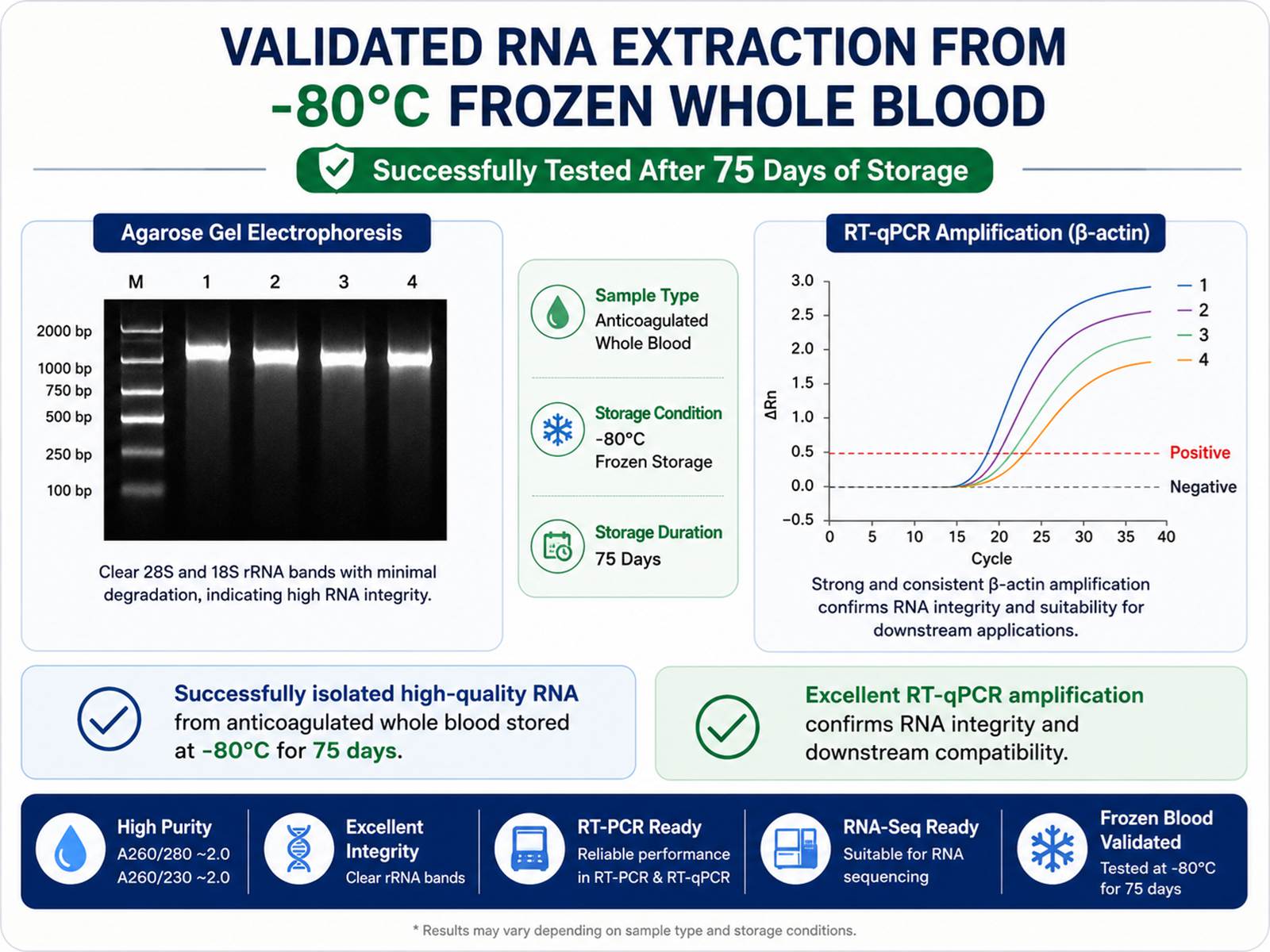
To evaluate RNA integrity, 8 μL purified RNA from each sample was analyzed on a 1% agarose gel for 15 minutes.
Key Findings
All four samples displayed clear RNA bands with minimal degradation.
The electrophoresis results demonstrated:
Excellent RNA integrity
High-quality RNA recovery
Consistent extraction performance across both storage strategies
These findings indicate that RNA remained stable during long-term frozen storage.
RT-qPCR Validation
Purified RNA was reverse-transcribed into cDNA using the First-Strand cDNA Synthesis Kit.
Five microliters of cDNA were used for RT-qPCR amplification of the β-actin gene.
Key Findings
All samples generated strong amplification curves.
The amplification curves appeared almost simultaneously with positive controls and produced relatively early Ct values.
These results confirmed:
Excellent RNA quality
Efficient reverse transcription
Strong amplification performance
Full compatibility with downstream gene expression analysis
Key Findings of This Study
Approximately 3 μg Total RNA Recovered from Frozen Whole Blood
Using 500 μL anticoagulated whole blood stored at -80°C for 75 days, approximately 3 μg total RNA was successfully recovered.
High RNA Integrity After Long-Term Storage
Agarose gel electrophoresis demonstrated minimal degradation and excellent RNA quality.
Excellent RT-PCR Performance
β-actin amplification confirmed that the purified RNA was fully suitable for downstream molecular biology applications.
No Leukocyte Separation Required
Unlike traditional blood RNA extraction methods, this workflow directly isolates total RNA from whole blood without prior leukocyte enrichment.
Resistant to Freeze-Induced Hemolysis
Because RNA is purified directly from whole blood, hemolysis caused by freezing does not significantly affect RNA recovery.
Comparison with Traditional Blood RNA Extraction Methods
Feature | Traditional Methods | Whole Blood Total RNA Extraction Kit |
RBC Lysis Required | Yes | No |
Leukocyte Separation | Yes | No |
Processing Time | 60–120 min | 20–40 min |
Frozen Blood Compatible | Limited | Yes |
Bone Marrow Compatible | Limited | Yes |
RT-PCR Ready | Yes | Yes |
RNA Sequencing Compatible | Yes | Yes |
Long-Term Frozen Blood Validation | Rarely Reported | Validated (-80°C, 75 Days) |
Applications
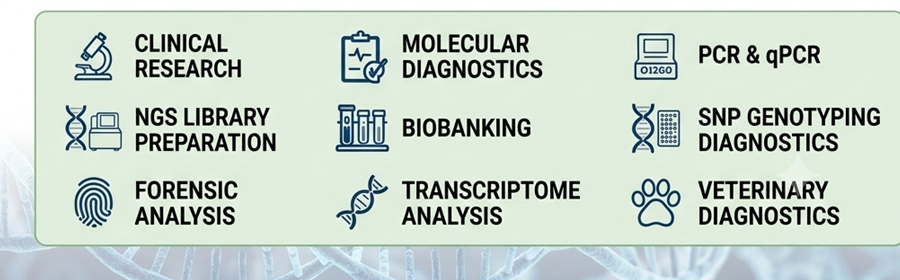
The purified RNA is suitable for a wide range of downstream applications, including:
RT-PCR
RT-qPCR
RNA Sequencing (RNA-Seq)
Transcriptome Analysis
Biomarker Discovery
Clinical Research
Precision Medicine
Infectious Disease Research
Hematology Research
Oncology Research
Frequently Asked Questions
Can RNA be extracted from blood stored at -80°C?
Yes. This study demonstrated successful RNA extraction from anticoagulated whole blood stored at -80°C for 75 days.
Is RBC lysis required?
No. The Whole Blood Total RNA Extraction Kit enables direct RNA extraction from whole blood without RBC lysis.
Can frozen blood samples be processed directly?
Yes. Frozen whole blood can be processed immediately after thawing.
Is the extracted RNA suitable for RNA sequencing?
Yes. The purified RNA is fully compatible with RT-PCR, RT-qPCR, and RNA-Seq workflows.
Can bone marrow samples be used?
Yes. The kit is compatible with both whole blood and bone marrow samples.
How much RNA can be recovered from frozen blood?
Approximately 3 μg of total RNA can be recovered from 500 μL whole blood stored at -80°C for 75 days.
Conclusion
RNA extraction from frozen whole blood has traditionally been considered difficult because of RNA degradation risks and complex preprocessing requirements.
The Whole Blood Total RNA Extraction Kit simplifies this process by enabling direct RNA extraction from whole blood without red blood cell lysis or leukocyte separation.
In this validation study, anticoagulated whole blood stored at -80°C for 75 days yielded approximately 3 μg of total RNA from 500 μL blood, with excellent purity, strong RNA integrity, and robust RT-qPCR performance.
These results demonstrate that frozen whole blood can serve as a reliable source of RNA for RT-PCR, RNA sequencing, biomarker discovery, clinical research, and precision medicine applications.
Recommended Product
Whole Blood Total RNA Extraction Kit
✔ Direct RNA Extraction from -80°C Frozen Whole Blood
✔ No Red Blood Cell Lysis Required
✔ Compatible with Bone Marrow Samples
✔ RT-PCR and RNA-Seq Ready
✔ Validated Using Whole Blood Stored at -80°C for 75 Days