
Rapid Whole Blood DNA Extraction in Just 8 Minutes: A Complete Guide for PCR, qPCR and Sequencing
July 15, 2026
Author: Forest BioTech
Introduction
Whole blood is one of the most widely used clinical and research sample types for genomic DNA extraction. Whether you are performing routine PCR, quantitative PCR (qPCR), Sanger sequencing, next-generation sequencing (NGS), SNP genotyping, or molecular diagnostics, the quality of extracted DNA directly determines the reliability and reproducibility of downstream experiments.
However, traditional blood DNA extraction protocols are often time-consuming and labor-intensive. Many conventional methods require red blood cell (RBC) lysis, Proteinase K digestion, prolonged incubation, and multiple centrifugation steps. These procedures not only increase hands-on time but also reduce laboratory throughput and increase the risk of sample contamination.
Modern molecular laboratories increasingly require rapid DNA extraction methods that deliver high purity, high yield, and excellent PCR compatibility without sacrificing reliability.
In this guide, we explain how genomic DNA can be extracted from fresh or frozen whole blood in approximately 8 minutes, discuss the limitations of conventional extraction methods, compare different DNA isolation technologies, and provide practical recommendations for selecting the best blood DNA extraction kit for research and diagnostic laboratories.
Whether you work in universities, hospitals, biotechnology companies, CROs, or molecular diagnostic laboratories, this guide will help you optimize your DNA extraction workflow while improving experimental efficiency.
Table of Contents
What Is Whole Blood DNA Extraction?
Why Is Whole Blood the Preferred Sample for Genomic DNA Isolation?
Where Does DNA Come From in Whole Blood?
Challenges of Traditional Blood DNA Extraction
Why Conventional DNA Extraction Takes So Long
How Rapid DNA Extraction Works
Rapid Whole Blood DNA Extraction Workflow
Performance Comparison
DNA Quality Evaluation
Downstream Applications
Frequently Asked Questions
Product Recommendation
What Is Whole Blood DNA Extraction?
Whole blood DNA extraction is the process of isolating genomic DNA from nucleated cells present in anticoagulated whole blood. Unlike plasma or serum, whole blood contains leukocytes (white blood cells), which carry the complete human genome and serve as the primary source of genomic DNA.
After purification, genomic DNA can be used for numerous molecular biology applications, including:
Conventional PCR
Quantitative PCR (qPCR)
Multiplex PCR
Digital PCR
Sanger sequencing
Next-generation sequencing (NGS)
SNP genotyping
STR analysis
Copy number variation (CNV) analysis
Molecular diagnostics
Pharmacogenomics
Biobank research
Because DNA quality has a direct impact on amplification efficiency, sequencing accuracy, and experimental reproducibility, selecting an appropriate extraction method is one of the most important steps in any molecular biology workflow.
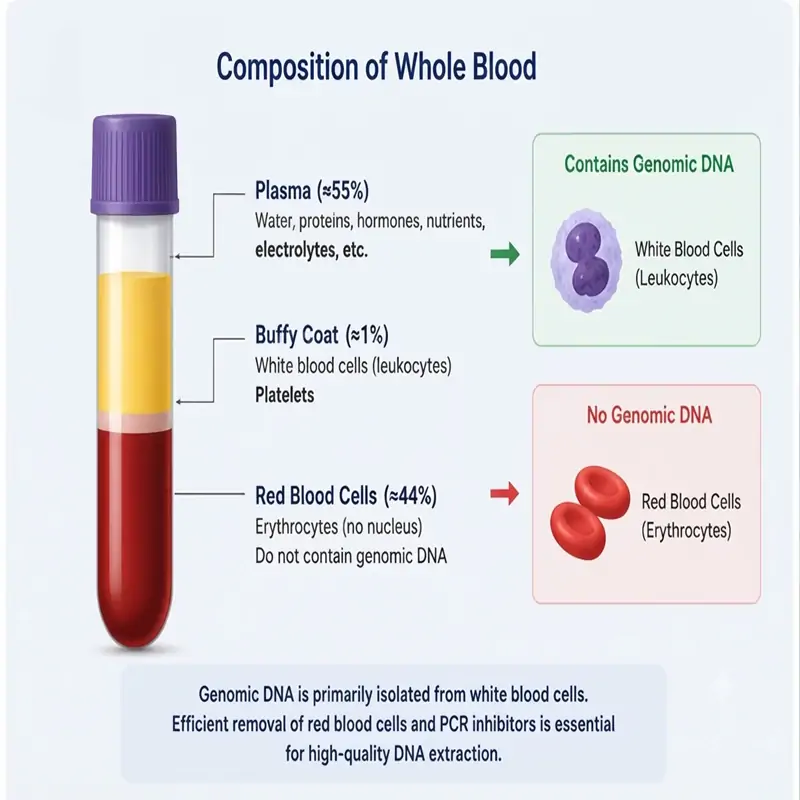
Why Is Whole Blood the Preferred Sample?
Whole blood remains the gold standard sample type for genomic DNA extraction because it offers several significant advantages over other biological specimens.
High DNA Yield
White blood cells contain abundant genomic DNA, allowing researchers to obtain sufficient DNA for multiple downstream experiments from a relatively small blood volume.
Easy Collection
Peripheral blood collection is minimally invasive and can be standardized across hospitals, research centers, and clinical laboratories.
Stable Sample Matrix
When stored under appropriate conditions using EDTA anticoagulant tubes, whole blood provides stable DNA suitable for routine laboratory analysis.
Broad Compatibility
Genomic DNA extracted from whole blood is compatible with virtually all modern molecular biology techniques, including PCR, qPCR, NGS, CRISPR validation, and genotyping assays.
Where Does DNA Come From in Whole Blood?
Many researchers assume that all blood cells contain DNA. In reality, only nucleated cells contribute genomic DNA during blood DNA extraction.
Blood Component | Contains DNA? | Function in DNA Extraction |
Red Blood Cells (Erythrocytes) | ❌ No | Do not contribute genomic DNA |
White Blood Cells (Leukocytes) | ✅ Yes | Primary DNA source |
Platelets | Very Limited | Minimal contribution |
Plasma | Cell-Free DNA only | Used for cfDNA applications |
Because mature human red blood cells lack nuclei, they contain no genomic DNA. Instead, they are rich in hemoglobin, which is a well-known PCR inhibitor. Efficient blood DNA extraction therefore focuses on recovering DNA from leukocytes while effectively removing hemoglobin and other contaminants.
Why DNA Purity Matters
High-quality genomic DNA should exhibit:
High purity
High molecular integrity
Minimal protein contamination
Low salt carryover
Efficient PCR amplification
Excellent sequencing performance
Poor-quality DNA often leads to:
Weak PCR amplification
Low qPCR sensitivity
Poor sequencing reads
Reduced NGS library quality
Inconsistent genotyping results
Repeat experiments and increased laboratory costs
For laboratories processing hundreds of blood samples each week, obtaining consistently high-quality DNA is just as important as reducing extraction time.
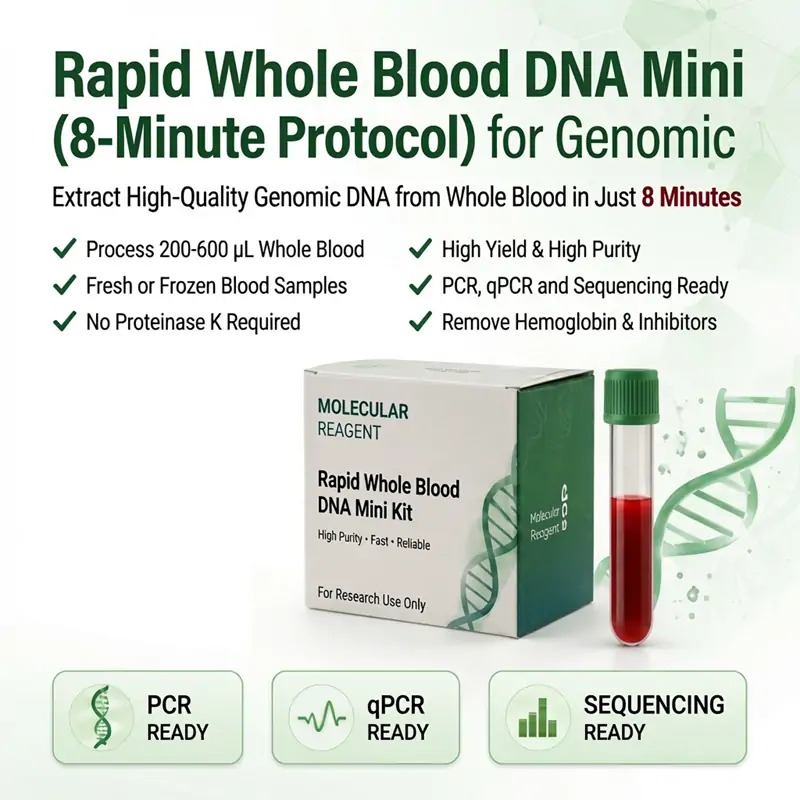
Rapid Whole Blood DNA Mini Kit (main product page)
PCR Troubleshooting Guide (future blog)
Challenges of Traditional Whole Blood DNA Extraction
Although genomic DNA extraction from whole blood is a routine laboratory procedure, many conventional protocols remain labor-intensive and time-consuming. Traditional methods were originally developed to maximize DNA purity rather than workflow efficiency, making them less suitable for modern laboratories processing dozens or even hundreds of samples each day.
A typical conventional workflow may require:
Red blood cell (RBC) lysis
White blood cell enrichment
Proteinase K digestion
Long incubation at elevated temperature
DNA binding
Multiple washing steps
DNA elution
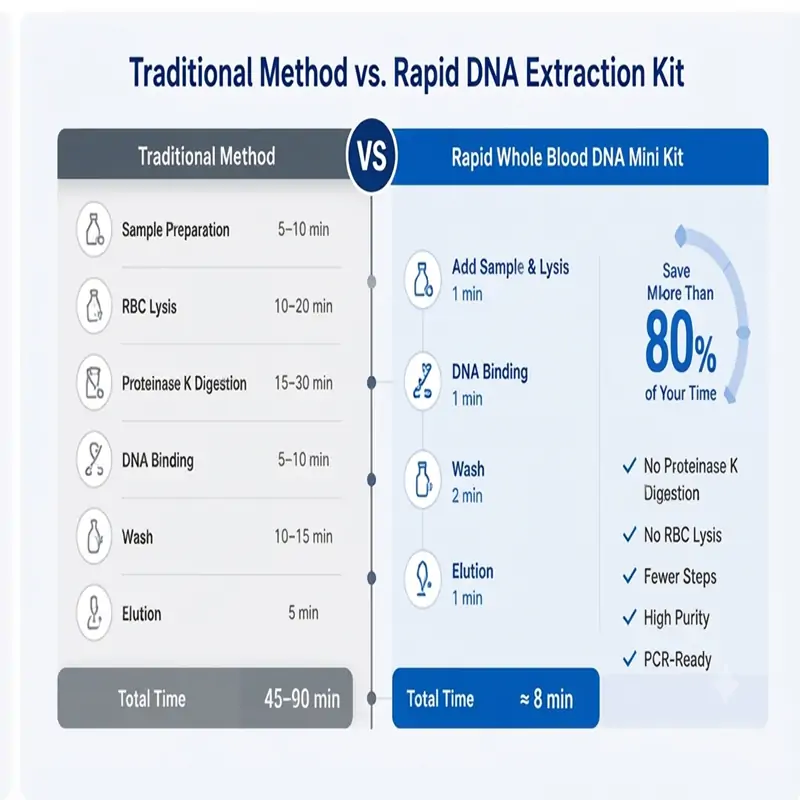
Depending on the protocol, the complete extraction process often requires 45–90 minutes, with significant hands-on operation.
For laboratories handling large sample volumes, these lengthy procedures reduce productivity and increase labor costs.
Why Do Traditional Blood DNA Extraction Methods Require Proteinase K?
Proteinase K is one of the most widely used enzymes in genomic DNA purification.
Its primary functions include:
Digesting structural proteins
Removing nucleases (DNases)
Breaking down histones surrounding genomic DNA
Improving DNA release from white blood cells
Increasing DNA purity
Although Proteinase K improves DNA recovery, it also introduces several disadvantages:
Additional reagent preparation
Extended incubation (typically 10–30 minutes)
Higher reagent costs
Longer overall workflow
Increased risk of handling errors
For routine PCR applications, many laboratories now prefer optimized extraction chemistries that eliminate the need for Proteinase K while maintaining excellent DNA quality.
Why Is Red Blood Cell Lysis Traditionally Performed?
Whole blood consists primarily of red blood cells, which account for approximately 99% of all blood cells.
Unlike leukocytes, mature human erythrocytes contain no nucleus and therefore contribute no genomic DNA.
However, red blood cells contain large amounts of:
Hemoglobin
Iron-containing proteins
Cellular debris
These components may interfere with downstream molecular applications if not efficiently removed.
Traditional DNA extraction methods therefore include a dedicated RBC lysis step before genomic DNA purification.
While effective, this extra step significantly increases processing time.
Modern rapid extraction technologies simplify the workflow by combining efficient cell lysis with optimized inhibitor removal, eliminating the need for separate erythrocyte lysis.
Common PCR Inhibitors Present in Whole Blood
One of the greatest challenges in blood DNA extraction is the removal of PCR inhibitors.
Common inhibitors include:
PCR Inhibitor | Source | Effect on PCR |
Hemoglobin | Red blood cells | Strong PCR inhibition |
Heme | Blood pigments | Polymerase inhibition |
Immunoglobulins | Plasma proteins | Reduced amplification efficiency |
Lactoferrin | Leukocytes | PCR interference |
Anticoagulants (Heparin) | Blood collection | Polymerase inhibition |
Cell debris | Sample processing | Reduced DNA purity |
Efficient removal of these inhibitors is essential for obtaining reliable PCR, qPCR, and sequencing results.
How Does Rapid Whole Blood DNA Extraction Work?
Recent advances in nucleic acid purification chemistry have made it possible to dramatically simplify whole blood DNA extraction.
Instead of performing multiple independent processing steps, optimized extraction buffers combine several functions into a single workflow.
A rapid DNA extraction system typically performs the following processes simultaneously:
Cell lysis
Protein denaturation
Hemoglobin removal
PCR inhibitor elimination
DNA stabilization
DNA binding to silica membrane
As a result, high-quality genomic DNA can be purified with significantly fewer manual operations.
This simplified workflow not only reduces extraction time but also minimizes opportunities for sample contamination and handling errors.
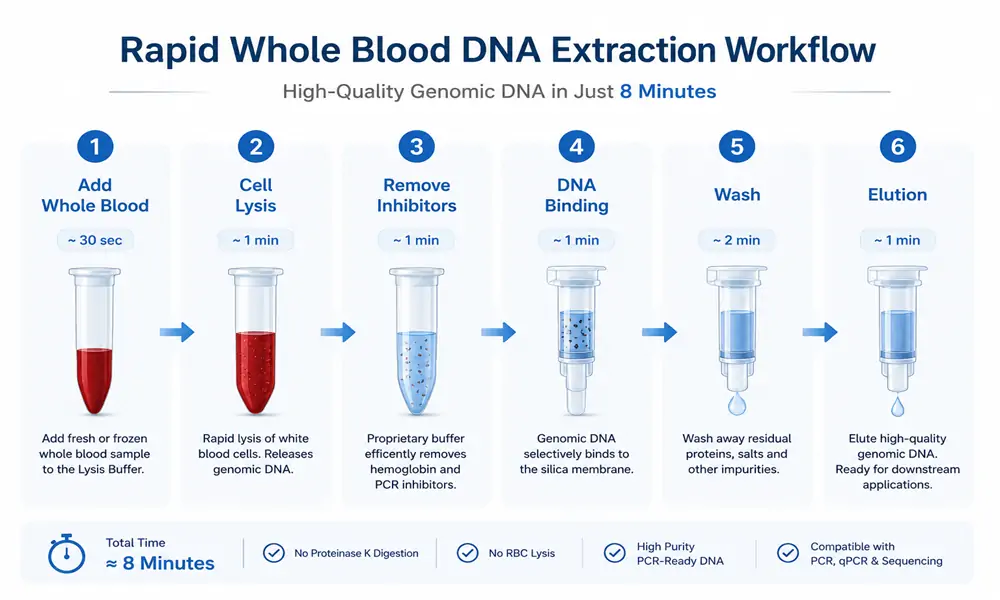
Rapid Whole Blood DNA Extraction Workflow
The complete workflow can be finished in approximately 8 minutes.
Step 1 – Add Whole Blood Sample
Fresh or properly stored frozen whole blood is mixed directly with the optimized lysis buffer.
No separate red blood cell lysis step is required.
Step 2 – Rapid Cell Lysis
The proprietary lysis chemistry rapidly disrupts cellular membranes, releasing genomic DNA from leukocytes while simultaneously denaturing proteins.
Step 3 – Removal of PCR Inhibitors
Specialized purification chemistry efficiently removes:
Hemoglobin
Cellular proteins
Lipids
Other contaminants
This improves downstream PCR performance.
Step 4 – DNA Binding
Released genomic DNA selectively binds to the silica membrane under optimized buffer conditions.
Step 5 – Washing
Residual salts, proteins, and impurities are removed through one or two rapid washing steps.
Step 6 – DNA Elution
Highly purified genomic DNA is recovered in a low-salt elution buffer and is immediately ready for downstream applications.
Typical Workflow Diagram
You can convert the following into a simple flowchart image:
Whole Blood Sample
│
▼
Rapid Cell Lysis
│
▼
PCR Inhibitor Removal
│
▼
DNA Binding
│
▼
Wash
│
▼
DNA Elution
│
▼
PCR │ qPCR │ Sequencing │ NGS
This workflow is ideal for use as a blog illustration and can also improve image SEO when exported as an SVG or PNG.
Traditional Method vs. Rapid Whole Blood DNA Extraction
Feature | Traditional Method | Rapid Whole Blood DNA Mini Kit |
Processing Time | 45–90 min | Approximately 8 min |
Proteinase K Digestion | Required | Not Required |
RBC Lysis | Required | Not Required |
Multiple Incubation Steps | Yes | No |
Manual Operations | Many | Minimal |
PCR Compatibility | Excellent | Excellent |
qPCR Compatibility | Excellent | Excellent |
Sequencing Compatibility | Excellent | Excellent |
DNA Purity | High | High |
Suitable for Routine Testing | Moderate | Excellent |
Laboratory Throughput | Moderate | High |
DNA Quality and Performance
A high-quality DNA extraction kit should provide more than simply rapid purification.
The extracted genomic DNA should also demonstrate:
High DNA concentration
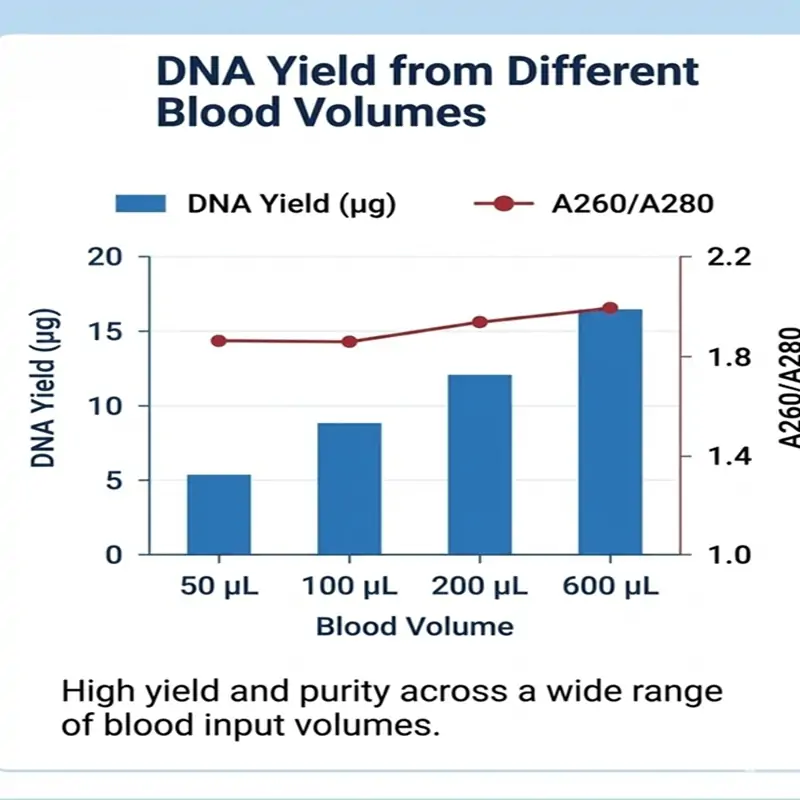
Excellent purity (A260/A280 approximately 1.8)
High molecular integrity
Minimal protein contamination
Excellent PCR amplification
Stable qPCR performance
Reliable sequencing quality
Researchers should evaluate DNA extraction performance using multiple quality indicators rather than extraction time alone.
PCR Validation
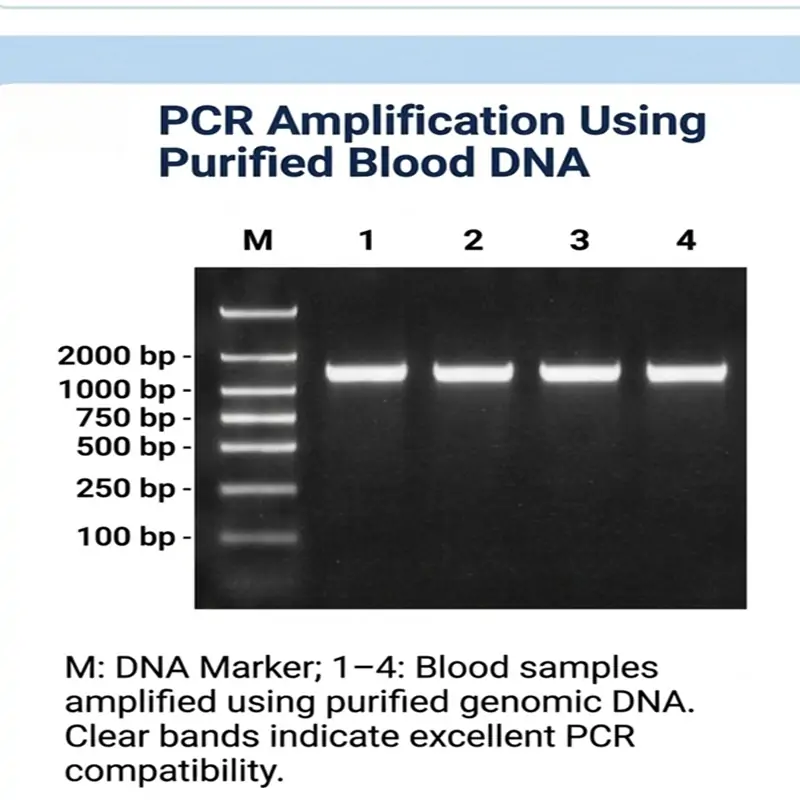
Purified genomic DNA was evaluated using standard PCR amplification assays.
Strong amplification bands were observed across all tested blood samples, demonstrating excellent compatibility with downstream PCR applications.
Recommended Downstream Applications
Genomic DNA purified using rapid whole blood extraction methods is suitable for numerous downstream applications, including:
Conventional PCR
Reliable amplification of genomic DNA targets with minimal PCR inhibition.
Quantitative PCR (qPCR)
High-purity DNA improves amplification efficiency and quantitative accuracy.
Multiplex PCR
Suitable for simultaneous amplification of multiple genetic targets.
Sanger Sequencing
Provides high-quality template DNA for mutation detection and sequence verification.
Next-Generation Sequencing (NGS)
Compatible with library preparation workflows requiring intact genomic DNA.
SNP Genotyping
Supports accurate identification of single nucleotide polymorphisms.
Molecular Diagnostics
Suitable for research-use molecular diagnostic assays requiring reproducible DNA extraction.
Why Researchers Are Choosing Rapid DNA Extraction Kits
As molecular laboratories continue to increase sample throughput, DNA extraction is no longer evaluated solely by DNA purity. Researchers also consider workflow efficiency, reproducibility, cost, and scalability.
Rapid DNA extraction kits offer several practical advantages:
Reduced hands-on time for laboratory staff
Higher daily sample processing capacity
Simplified training for new personnel
Lower risk of cross-contamination
Consistent DNA quality across batches
Faster turnaround for time-sensitive projects
Improved overall laboratory productivity
For research laboratories, biotechnology companies, CROs, and clinical research centers, adopting a rapid whole blood DNA extraction workflow can significantly improve operational efficiency without compromising downstream analytical performance.
How to Choose the Best Whole Blood DNA Extraction Kit
Selecting the right whole blood DNA extraction kit is essential for obtaining consistent, high-quality genomic DNA while maintaining laboratory efficiency. Instead of focusing solely on extraction speed, researchers should evaluate several key performance factors.
DNA Purity
High-quality genomic DNA should have minimal protein, salt, and hemoglobin contamination. Purified DNA should perform reliably in PCR, qPCR, sequencing, and other downstream applications without additional purification.
DNA Yield
The kit should provide sufficient DNA from small blood volumes while maintaining consistent recovery across different sample types and operators.
Workflow Simplicity
An optimized workflow reduces manual handling, shortens training time, and minimizes the risk of cross-contamination.
Processing Time
For laboratories processing multiple samples every day, reducing extraction time from nearly one hour to only a few minutes can significantly improve productivity.
Downstream Compatibility
Always confirm that the extracted DNA is suitable for:
Conventional PCR
Quantitative PCR (qPCR)
Digital PCR
Multiplex PCR
Sanger Sequencing
Next-Generation Sequencing (NGS)
SNP Genotyping
STR Analysis
Sample Compatibility
An ideal DNA extraction kit should be compatible with commonly used blood collection methods, including EDTA-anticoagulated whole blood, and should perform consistently with both fresh and properly stored frozen samples.
Fresh Whole Blood vs. Frozen Whole Blood
Many laboratories work with archived blood samples collected during previous clinical studies or biobank projects. Therefore, compatibility with frozen whole blood has become increasingly important.
Sample Type | Advantages | Considerations |
Fresh Whole Blood | Highest DNA integrity and easiest processing | Best processed soon after collection |
Frozen Whole Blood | Suitable for long-term storage and retrospective studies | Requires optimized extraction chemistry to maintain DNA quality |
A robust extraction method should deliver reproducible DNA quality from both fresh and frozen whole blood, enabling greater flexibility for research and diagnostic laboratories.
Spin Column vs. Magnetic Bead DNA Extraction
Both spin column and magnetic bead technologies are widely used for genomic DNA purification.
Spin Column vs. Magnetic Bead DNA Extraction Comparison
Comparison Dimension | Spin Column-Based DNA Extraction | Magnetic Bead-Based DNA Extraction |
Core Advantages | • High DNA purity • Excellent PCR compatibility • Cost-effective for routine laboratory use • Simple and intuitive workflow • No specialized instruments required | • Easy automation capability • High-throughput processing • Fully compatible with robotic workstations |
Limitations / Threshold | • Primarily designed for small- to medium-throughput workflows with more manual steps | • Higher equipment cost • Greater initial investment • Best suited for centralized labs processing hundreds of samples daily |
Target Audience & Applications | • Research laboratories & Universities
• Biotechnology companies & CROs • Routine molecular biology workflows | • Large-scale centralized diagnostic labs • Industrial high-throughput genetic testing platforms |
Summary Conclusion | For most routine molecular biology laboratories, spin column-based extraction remains the preferred balance between performance, simplicity, and cost. | Ideal for modern laboratories seeking maximum efficiency through full automation and high throughput. |
Frequently Asked Questions (FAQ)
1. What is the best method for whole blood DNA extraction?
For most research laboratories, silica spin column technology provides an excellent balance of DNA purity, reproducibility, cost-effectiveness, and ease of use.
2. Can genomic DNA be extracted from frozen whole blood?
Yes. Properly stored frozen whole blood can yield high-quality genomic DNA when an optimized extraction protocol is used.
3. Is Proteinase K always required?
No. Modern rapid extraction chemistries can eliminate the need for Proteinase K while maintaining excellent DNA quality for PCR and sequencing applications.
4. Why do red blood cells not contribute genomic DNA?
Mature human red blood cells do not contain nuclei and therefore do not contain genomic DNA. Genomic DNA is primarily isolated from white blood cells.
5. Why is hemoglobin considered a PCR inhibitor?
Hemoglobin can interfere with DNA polymerase activity, reducing PCR amplification efficiency and affecting downstream molecular analyses.
6. Which anticoagulant is recommended for DNA extraction?
EDTA-anticoagulated whole blood is generally recommended because it preserves DNA integrity while minimizing PCR inhibition.
7. Can extracted DNA be used for quantitative PCR?
Yes. High-quality genomic DNA is fully compatible with qPCR when PCR inhibitors are effectively removed during extraction.
8. Is the DNA suitable for sequencing?
Yes. Purified genomic DNA can be used for Sanger sequencing, next-generation sequencing, and other genomic analyses.
9. How long does DNA extraction normally take?
Traditional methods often require 45–90 minutes. Optimized rapid extraction methods can reduce the workflow to approximately 8 minutes.
10. What blood volume is typically required?
Most commercial kits support blood volumes ranging from 50 μL to 600 μL, depending on the extraction protocol and expected DNA yield.
11. Can this method be used for animal blood samples?
Many genomic DNA extraction kits are compatible with blood samples from various mammalian species. Users should verify sample compatibility before use.
12. Does the kit remove PCR inhibitors?
Yes. Efficient removal of hemoglobin, proteins, and other contaminants is essential for reliable downstream molecular applications.
Conclusion
Whole blood DNA extraction remains one of the most fundamental procedures in molecular biology, clinical research, and genetic analysis. While conventional protocols provide reliable DNA purification, they often require lengthy workflows involving Proteinase K digestion, erythrocyte lysis, and multiple manual processing steps.
Advances in nucleic acid purification chemistry now allow researchers to isolate high-quality genomic DNA in approximately 8 minutes, significantly improving laboratory efficiency without compromising DNA purity or downstream performance.
When selecting a DNA extraction kit, researchers should evaluate not only extraction speed but also DNA quality, reproducibility, workflow simplicity, sample compatibility, and suitability for PCR, qPCR, sequencing, and other molecular applications.
By choosing an optimized extraction method, laboratories can reduce turnaround time, increase sample throughput, and improve the consistency of experimental results.
Recommended Product
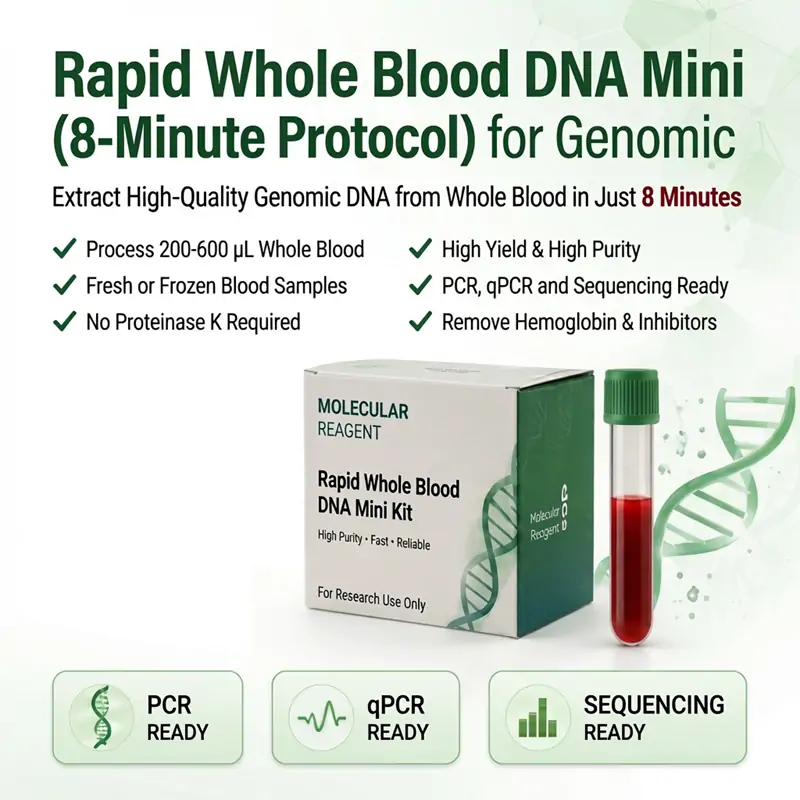
If your laboratory is looking for a fast, reliable, and easy-to-use solution for whole blood genomic DNA purification, the Rapid Whole Blood DNA Mini Kit offers an optimized workflow designed for modern molecular biology laboratories.
Key Features
Approximately 8-minute DNA extraction
No Proteinase K digestion required
No red blood cell lysis required
High-purity genomic DNA
Excellent PCR and qPCR compatibility
Suitable for sequencing and SNP genotyping
Compatible with fresh and frozen whole blood
Ideal for research laboratories, biotechnology companies, CROs, and molecular diagnostic laboratories
👉 Learn more on our product page:
https://www.molecularreagent.com/product/dna-extraction-kit/rapid-whole-blood-dna-mini-kit/
Conversion Section (CTA)
Need a Faster Blood DNA Extraction Solution?
The Rapid Whole Blood DNA Mini Kit enables researchers to isolate high-quality genomic DNA from blood samples within just 8 minutes.
Suitable for:
✓ PCR
✓ qPCR
✓ Sequencing
✓ Genotyping
✓ Molecular Diagnostics
✓ Veterinary Testing
Request a Free Sample
Request Distributor Pricing
Contact Technical Support
Related Articles
To further optimize your molecular biology workflow, you may also be interested in:
Whole Blood RNA Extraction: Common Challenges and Solutions
PCR Inhibitors in Blood Samples and How to Remove Them
DNA vs. RNA Extraction: Key Differences Explained
How to Choose the Right Nucleic Acid Extraction Kit for Your Laboratory