Mob/ Whatsapp/Wechat: +86 138 806 76215 | Email: [email protected] / [email protected]
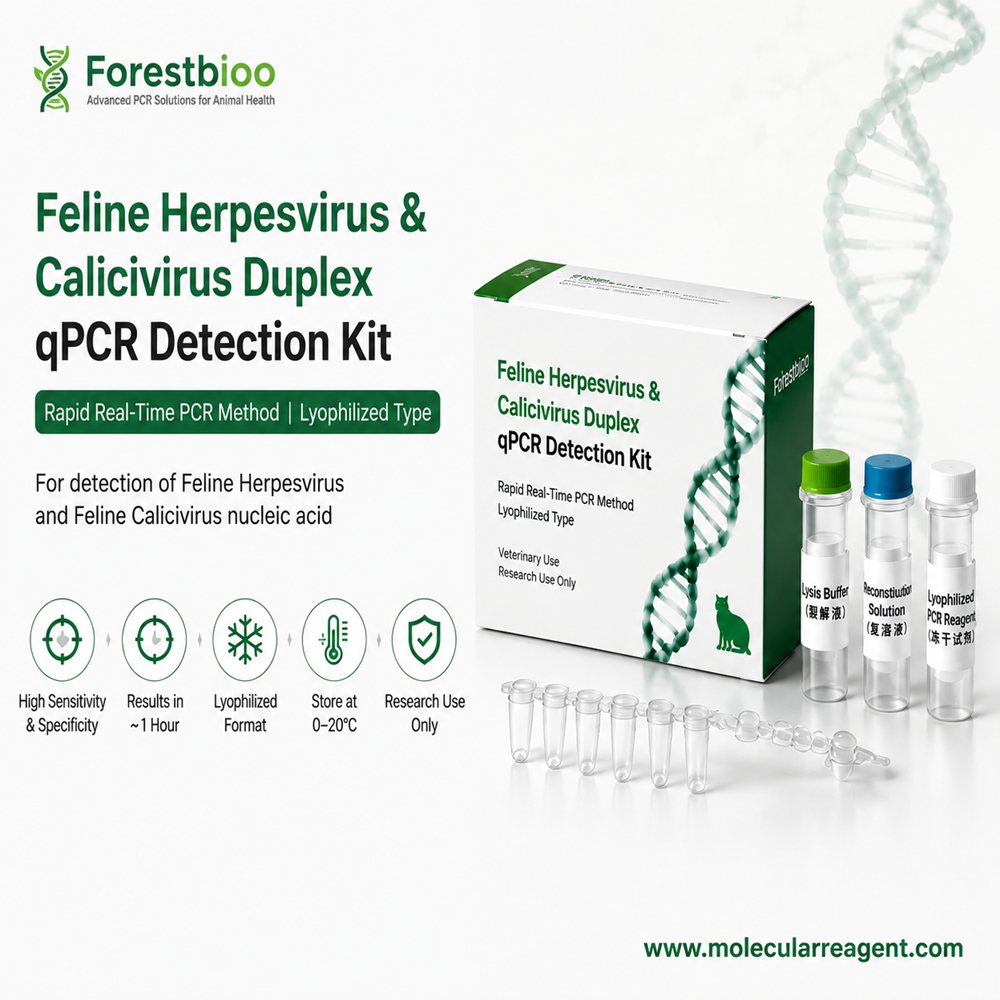
 Multiplex Detection: Simultaneously detects two primary upper respiratory pathogens (FHV-1 & FCV) in a single run detection in 1 hourLyophilized PCR Reagent FormatDirect PCR using lysis solution for rapid template preparation
Non-Invasive Sample Collection: Optimized for oropharyngeal, nasal, and ocular swab samples.Research Use Only
Multiplex Detection: Simultaneously detects two primary upper respiratory pathogens (FHV-1 & FCV) in a single run detection in 1 hourLyophilized PCR Reagent FormatDirect PCR using lysis solution for rapid template preparation
Non-Invasive Sample Collection: Optimized for oropharyngeal, nasal, and ocular swab samples.Research Use Only
The Feline Herpesvirus-1 / Feline Calicivirus (FHV-1 / FCV) qPCR Detection Kit(FVPC203) is a fast, highly sensitive multiplex real-time PCR assay designed for the simultaneous detection of Feline Herpesvirus-1 (FHV-1) and Feline Calicivirus (FCV) nucleic acids in feline ocular, nasal, and oral mucosal samples.
Utilizing advanced lyophilization technology, all essential reagents—including enzymes, primers, fluorescent probes, and master mix—are pre-portioned and freeze-dried. This design supports convenient room temperature transport and storage (0–20°C) for up to 12 months, avoiding cold-chain requirements while providing rapid and reliable results.
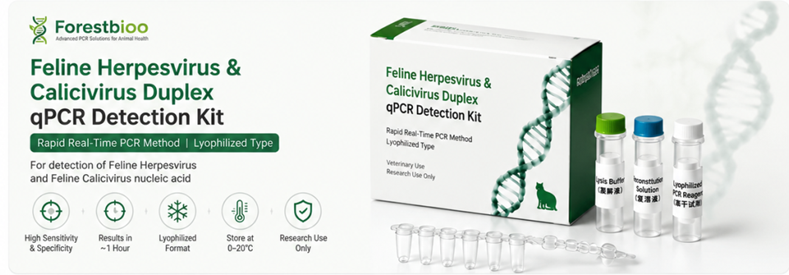
Multiplex Detection: Simultaneously detects two primary upper respiratory pathogens (FHV-1 & FCV) in a single run.
Room Temperature Storage: Lyophilized format allows transport and storage at 0–20°C for 12 months.
Convenient Workflow: Pre-mixed dried reagents significantly minimize manual pipetting errors and cross-contamination risk.
Rapid Turnaround: Delivers results in under 40 minutes using fast thermal cycling parameters.
Non-Invasive Sample Collection: Optimized for oropharyngeal, nasal, and ocular swab samples.
Component | Quantity | Main Function |
Lysis Buffer | 5 Tubes | Rapid sample lysis for mucosal swab samples |
Reconstitution Buffer | 5 Tubes | Sample template neutralization |
Lyophilized Reagents | 5 Pouches | Pre-mixed freeze-dried PCR reaction mix |
8-Strip Tube Caps | 1 Pouch | Optical sealing caps for fluorescence detection |
Sample Collection: Collect mucosal secretions from feline oropharyngeal (oral), nasal, or ocular (eye) membranes using a clean flocked swab.
Lysis Step: Snap off the swab head directly into a tube of Lysis Buffer. Vortex for 30 seconds, then gently flick or spin to collect liquid at the tube bottom.
Template Neutralization: Transfer 20 µL of the lysed liquid into a tube of Reconstitution Buffer. Vortex for 10 seconds and flick to the bottom. The processed mixture is now ready as the nucleic acid template
Reconstitute Lyophilized Mix: Take 1 tube of Lyophilized Reagent and add 20 µL of the processed sample template.
Mix & Cap: Seal tightly with an 8-Strip Cap, vortex for 10 seconds, and centrifuge briefly to ensure liquid is at the bottom with no trapped air bubbles.
Instrument Loading: Place the reaction tube into the fluorescence qPCR instrument with the black dot marker facing left.
Run Program: Select the preset "Feline Herpes / Feline Calici"program and initiate the run.
Stage | Temperature & Duration | Cycles | Signal Acquisition |
Stage 1 | 55°C for 5 min | 1 | Off |
Stage 2 | 95°C for 2 min | 1 | Off |
Stage 3 | 95°C for 10 sec
58°C for 15 sec | 40 | Off
Collect Fluorescence |
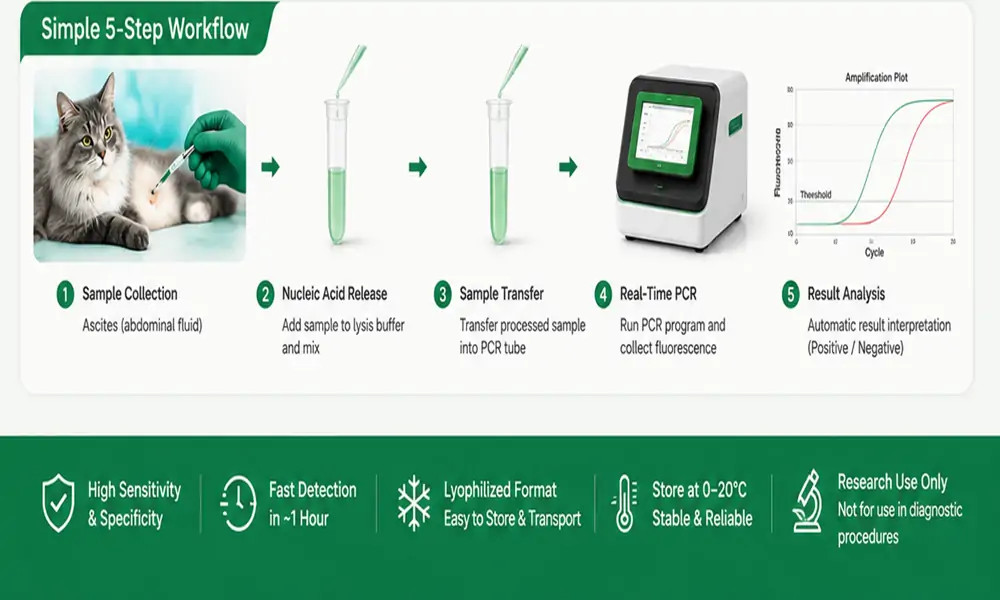
Adjust the baseline and fluorescence threshold after the run. Set the threshold line above the highest point of a normal negative control curve. A valid positive reaction displays a clear sigmoidal (S-shaped) amplification curve.
Positive Result (+): Target sample Ct value ≤ 36.0.
Negative Result (-): Target sample Ct value > 36.0 or no amplification curve.
Note: If negative/positive controls produce anomalous results, the batch run is invalid.
Research Use Only (RUO): Strictly intended for basic research applications. Do NOT use for human/animal clinical diagnostics or therapeutics.
Workflow Zoning: Strictly segregate sample preparation, PCR setup, and detection areas to prevent cross-contamination.
Post-PCR Tube Management: NEVER open reaction tubes after amplification. Do NOT autoclave amplified tubes.
Contamination Mitigation: Add positive controls last during sample loading. Regularly clean workbenches and equipment with 10% bleach, 75% ethanol, or UV radiation.
Related Veterinary qPCR Kits
· Feline Panleukopenia Virus (FPV) Single-Plex qPCR Kit (FVPC104)
· Feline Respiratory 5-Plex qPCR Detection Kit (FVPC502)
· Feline Gastrointestinal 5-Plex qPCR Detection Kit (FVPC501)
· Feline Infectious Peritonitis (FIP) qPCR Detection Kit(FVPC101)
· Feline Herpesvirus & Calicivirus Duplex qPCR DetectionKit(FVPC203)
A1: Dual-site or triple-site swabbing (combining ocular, nasal, and pharyngeal mucosal swabs onto a single swab) provides the highest diagnostic sensitivity for FHV-1 and FCV.
A2: Since FHV-1 and FCV produce nearly identical upper respiratory tract symptoms (ocular discharge, nasal runoff, sneezing, oral ulcers), PC203 allows researchers to test for both viral pathogens simultaneously in a single reaction well.
Looking for a reliable supplier of veterinary PCR kits?
Forest BioTech provides professional molecular diagnostic solutions with global OEM and private-label services.
✔ OEM & Private Label Available
✔ Ambient Temperature Shipping
✔ Global Technical Support
✔ Fast Worldwide Delivery